
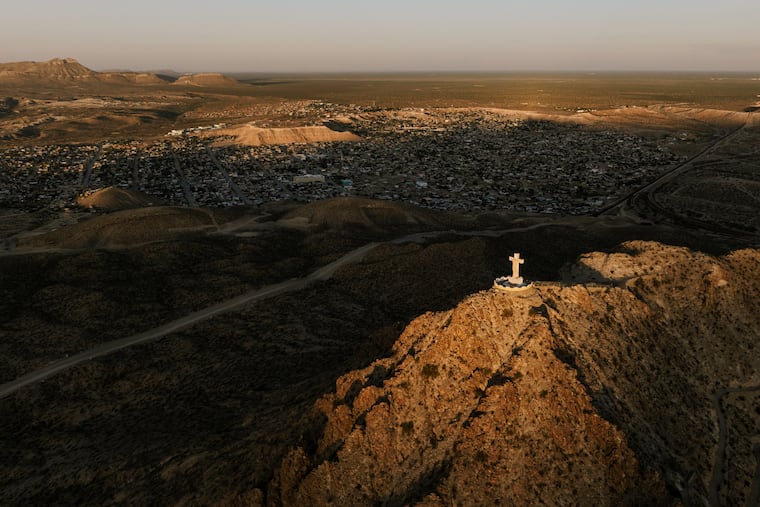
Diocese seeks to protect 29-foot Jesus statue from potential impact of Trump’s border wall plans.
At dawn, when sunlight begins to illuminate the imposing 29-foot limestone statue of Jesus atop Mount Cristo Rey in New Mexico, many, like Lourdes Castañon, feel a deep spiritual connection. The mountain, located near the border with Mexico, serves as a significant pilgrimage site for thousands. However, the future of this sacred landmark is now under threat due to plans for the construction of a border wall proposed by the Trump administration. This development raises profound concerns among the local Catholic diocese and the community.
The Department of Homeland Security has initiated proceedings to claim 14 acres of land from the diocese, aiming to construct approximately 1.5 miles of new border wall. The diocese contends that the erection of a steel barrier would not only compromise a religious site but also infringe upon the rights of worshippers. Castañon, a 74-year-old volunteer with the Mount Cristo Rey Restoration Committee, expressed concern, stating that the wall would mar the natural landscape of the area.
Recently, the federal agency filed a lawsuit seeking control over the land, offering approximately 0,000 as compensation. The diocese argues that this action disregards First Amendment protections, emphasizing the importance of religious freedom. The diocese’s legal stance asserts that the construction of the wall represents a misguided approach to immigration policy, particularly in a region steeped in cultural and spiritual significance.
This ongoing legal battle is part of a broader resistance against the border wall initiated under the Trump administration, which has faced opposition from landowners, environmental advocates, and Native American groups since its inception. Despite claims of utilizing lawful authority for wall construction, several opponents have achieved minor legal victories, prompting adjustments to planning protocols in specific areas.
Mount Cristo Rey, known historically as Sierra de Cristo Rey, attracts both pilgrims and individuals attempting unauthorized crossings into the United States. As the number of migrant apprehensions increases, the site has also witnessed a rise in vandalism and crime, causing concern among its caretakers.
While some local residents, like Ruben Escandon, acknowledge safety issues associated with the wall, they also believe that the current border situation could enhance the site’s visibility and tourism potential. Escandon, who comes from a lineage of caretakers at Cristo Rey, argues that securing the area may ultimately protect its heritage.
Contrarily, environmentalists caution that the construction of the wall could disrupt delicate desert ecosystems and exacerbate dangers related to unauthorized border crossings. The diocese has previously cooperated with Border Patrol on security measures, yet firmly opposes the wall, citing its detrimental impact on the character and sanctity of the site.
The Justice Department is pushing for a swift conclusion to the case, citing urgent timelines linked to contracted construction timelines. However, diocese representatives argue that the government’s rush is unwarranted and fails to account for the significant religious liberty concerns raised.
As contractors begin preliminary work at the base of Mount Cristo Rey, the local community grapples with anxiety over its heritage and the implications of the border wall on this cherished landmark. The current legal proceedings epitomize a clash between national security interests and the preservation of cultural and religious identity in one of America’s most poignant border regions.


