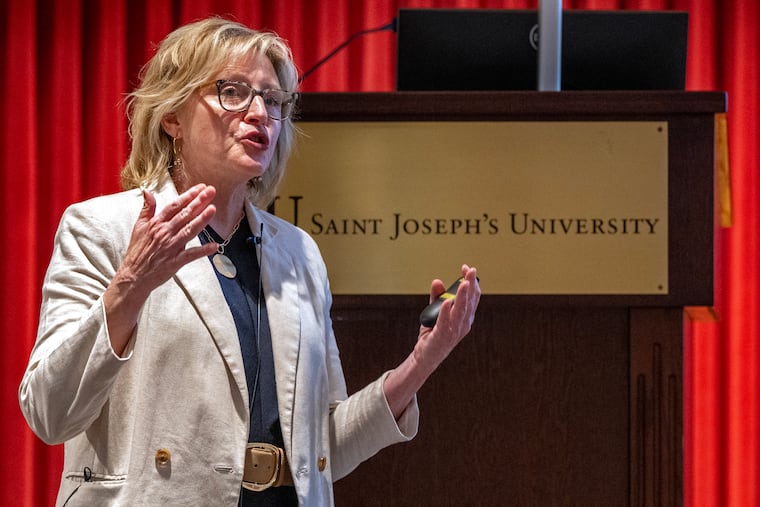
Victoria Chang highlights the emotional impact of loss in her work ‘Tree of Knowledge.’
Acclaimed poet Victoria Chang has recently released her new collection of poetry titled “Tree of Knowledge,” a work that delves into diverse themes surrounding trees, art, and a poignant Chapter of California history. The genesis of this collection can be traced back to the emotional experience of witnessing the tragic removal of a neighborhood eucalyptus tree. What began as a personal moment of loss expanded into a broader exploration of human experiences, art, and communal history.
Chang, who has received accolades such as being long-listed for the National Book Award and serving as a finalist for the National Book Critics Circle Award, reflects on her creative process while on an artist residency in Italy at Civitella Ranieri, a venue boasting an extensive poetry library donated by celebrated poet Mark Strand. This backdrop has inspired Chang to delve deeper into her reading habits, highlighting the joy she finds in exploring both independent bookstores and vast libraries. She emphasizes that reading enriches imagination and fosters empathy, asserting that literature can indeed contribute to making the world a better place.
“Tree of Knowledge” encompasses not only reflections on the natural world but also confronts a dark history—the expulsion of Chinese residents from Eureka, California, in 1885. This historic event, which saw 263 Chinese Americans forcibly removed within two days following a violent incident, serves as a critical foundation for several of the poems within the collection. The impact of this historical injustice resonates through Chang’s work, where she intertwines personal and collective memories, ultimately leading to artistic expressions that include not just poetry but also visual art collages.
Throughout her writing, Chang incorporates conversations with visual artists and their works, noting the influence of figures such as Joan Mitchell and Hilma af Klint. Her poetry reflects a deep respect for art and nature, which she perceives as active participants in a dialogue between the observer and the observed. In her long poem titled “Eureka,” for example, Chang integrates personal recollections with historical context, employing structural choices that amplify the interconnectedness of her narrative.
For Chang, the process of writing poetry parallels the nurturing of plant life, requiring patience, observation, and ongoing adjustments. She articulates a belief that both reading and writing poetry can transform individuals, echoing the essence of self-discovery at the heart of her creative practice. Each poem is crafted with a unique form and aesthetic, often incorporating visual elements that reinforce the themes being explored.
In addition to her literary pursuits, Chang reflects fondly on the vibrant literary landscape of Los Angeles, where she maintains a home. The city’s diversity, along with its collection of independent bookstores, fosters a rich literary culture that she continues to cherish. Prominent bookshops such as Skylight Books and Vroman’s exemplify the local commitment to fostering a passionate reading community.
Ultimately, “Tree of Knowledge” invites readers into a multifaceted dialogue framed by historical context, personal narratives, and artistic interactions, showcasing Chang’s evolving vision as a poet deeply engaged with both her craft and the world around her. Media News Source.