Ukraine’s President Zelensky dismisses military chief amid protests and appoints a new leader.
Zelensky Makes Major Military Restructuring Amid Protests in Ukraine
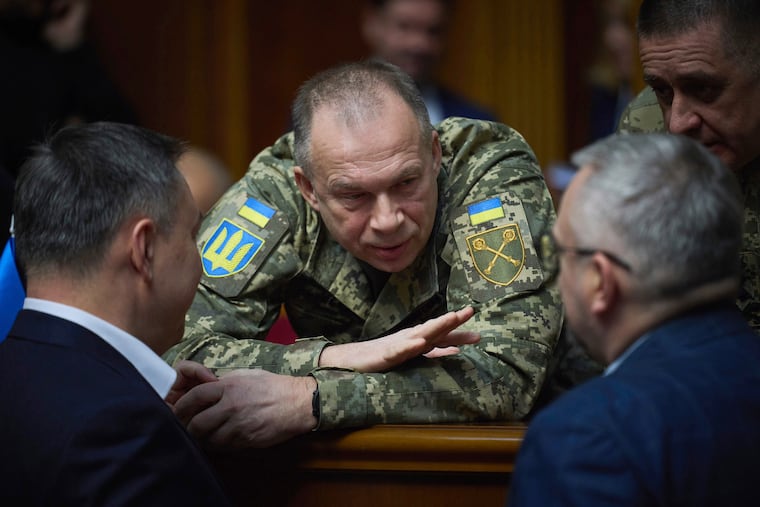
In a significant shift in military leadership, Ukrainian President Volodymyr Zelensky announced the dismissal of General Oleksandr Syrskyi from his role as commander-in-chief of the armed forces. This decision follows widespread protests across Kyiv and various cities in Ukraine, where demonstrators demanded Syrskyi’s removal.
The protests emerged after calls for the reinstatement of former Defense Minister Mykhailo Fedorov, a figure credited with advancing military modernization efforts. Protesters viewed Syrskyi as emblematic of outdated Soviet-style military command structures, highlighting a desire for reform within the military hierarchy.
In the wake of these events, Zelensky appointed Mykhailo Drapatyi to replace Syrskyi as the new army chief. In a statement shared via social media, Zelensky expressed a unified goal of achieving victory over Russian forces and creating conditions that would compel Russia to pursue peace negotiations. His decision came after engaging in a series of discussions with military leadership aimed at addressing the ongoing concerns voiced by citizens.
Although Zelensky acknowledged Syrskyi’s role in Ukraine’s military efforts, particularly in defending Kyiv and successful offensives in regions like Kharkiv and Kursk, the president emphasized the need for a new direction within the armed forces. He expressed gratitude for Syrskyi’s contributions while also recognizing the need for evolution in leadership that reflects the contemporary challenges Ukraine faces in its ongoing conflict with Russia.
Additionally, on the same day, Zelensky met with Fedorov, extending an offer for a respected government position aimed at unifying the nation’s technology sector. However, details regarding Fedorov’s acceptance of the role remain unclear, leaving open the question of whether these adjustments in leadership will pacify the public and restore calm amid the protests.
As Ukraine continues to navigate a tumultuous landscape marked by military conflict and internal unrest, the decision to shift military command represents a critical moment in Zelensky’s administration. With the stakes higher than ever, the new appointment is expected to influence not only military strategy but also the broader political climate in the country, which has been significantly impacted by ongoing struggles against external aggression.
This restructuring marks an essential moment in Ukraine’s efforts to adapt its military strategies and governance to the pressing demands of a society in crisis, seeking both stability and a pathway toward peace.