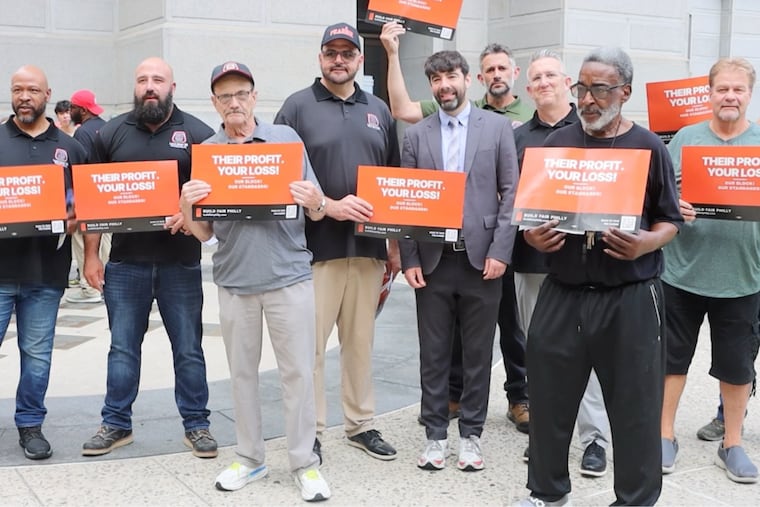
Orange signs questioning rogue developers appear around Philadelphia, raising concerns about accountability in the real estate sector.
In recent months, a grassroots campaign dubbed “Build Fair Philly” has gained traction in Philadelphia, drawing attention to concerns surrounding real estate development in the city. Residents, including local advocate Peter Kim, discovered vivid orange flyers promoting the initiative, which boldly proclaimed, “Their Profit. Your Loss!” The messaging, while pointing to issues of irresponsible development, refrained from naming specific corporations or individuals, instead encouraging residents to engage with community organizations and sign the Build Fair Philly pledge.
The campaign appears to have been orchestrated by the Eastern Atlantic States Regional Council of Carpenters, based in Philadelphia, a surprising twist given that unions typically support development to create job opportunities for their members. Leaders of the Carpenters have emphasized that the intent of the campaign is to foster awareness regarding irresponsible construction practices rampant in neighborhoods populated by rowhouses. They have advocated for more accountable development, seeking licensed contractors who pay fair wages and employ local residents.
This initiative comes at a time when the construction landscape in Philadelphia faces significant challenges. After a spike in interest rates in 2022, construction activity slowed, particularly in the commercial sector, which traditionally employs union labor. Additionally, various long-standing sources of trades work, like the Philadelphia Housing Authority, have become less reliable in providing consistent job opportunities.
The Build Fair Philly campaign has resonated with community members, garnering over 10,000 pledges and distributing thousands of lawn signs throughout the city. The Carpenters have also initiated direct communication with residents, canvassing neighborhoods and collecting feedback on their experiences with local development. Their efforts are complemented by the campaign’s social media presence, including Instagram accounts showcasing rallies featuring City Council members.
The campaign has not only brought local development issues to the forefront but has also prompted discussions about broader social equity in construction practices. Leaders have stressed that their mission extends beyond mere advocacy for union jobs; it encompasses ensuring that development reflects the makeup and needs of Philadelphia’s communities, including greater diversity in hiring practices.
Overall, Build Fair Philly aims to address what its leaders identify as a critical need for responsible and equitable development in Philadelphia, in hopes of aligning community interests with the real estate development processes. The call for increased engagement with both the construction industry and community organizations seeks to foster a more inclusive environment for all city residents. As the campaign continues to unfold, it remains to be seen how these efforts will reshape the narrative around development in Philadelphia and influence future policies.
Media News Source