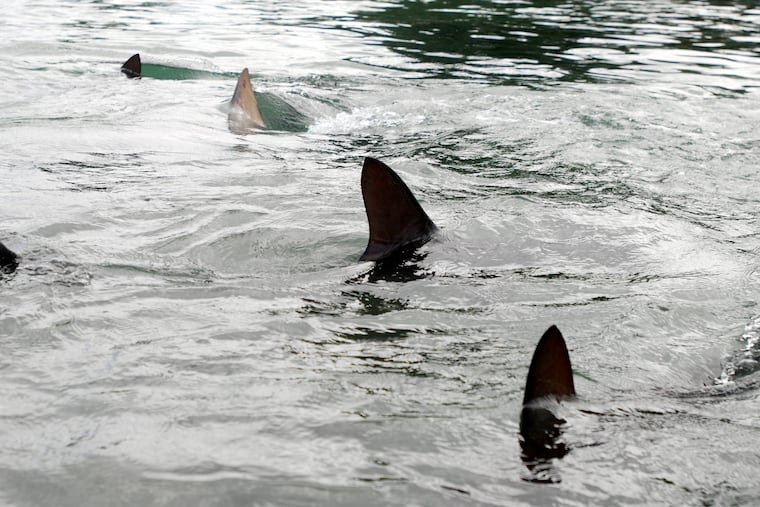
Nearly 30 dead sharks have been discovered along the shore in Sea Isle City.
An unusual marine occurrence recently captured the attention of visitors to Sea Isle City, New Jersey, when nearly 30 small dogfish sharks were reported washed ashore. Such a sight is not typically associated with this coastal resort area, leading to speculation regarding the cause of these deaths.
The incident took place earlier this week when a local woman identified as Michelle Greenling was strolling along a ten-block stretch of beach. Initially encountering a few deceased sharks, her concern grew as the number increased, prompting her to consider the alarming possibility that the creatures may have fallen prey to an environmental anomaly or some form of predation.
While the sight of multiple dead sharks raised questions about the ecological state of the waters in South Jersey, experts have provided context that alleviates immediate concerns. Thomas Grothues, director of the Rutgers University Marine Field Station in Tuckerton, examined photos of the deceased sharks and attributed the phenomenon to a phenomenon frequently observed in marine environments: bycatch.
Bycatch refers to the unintended capture of non-target species during commercial fishing operations. The process often results in the accidental death of small fish, including species such as dogfish sharks, due to weight-related stress or mishandling during discarding. Grothues emphasized that it is not uncommon for fishing vessels to capture a large number of these sharks unintentionally, with the potential for damage occurring when they are sorted and returned to the water.
Similarly, Lawrence Hajna, media director for the New Jersey Department of Environmental Protection, indicated that such occurrences are frequently seen during summer months. As warm weather prompts fish to feed near the shoreline, they can sometimes become trapped in sandbars as tidal movements change. Moreover, he suggested that the washed-up sharks may have been discarded by commercial or recreational fishers, a practice typical in fishing operations.
Despite the peculiar nature of this incident, the New Jersey Department of Environmental Protection has stated that no further investigation is planned, considering it an event not outside the realm of normalcy for summer seabed dynamics. As strains on marine ecosystems continue to evolve, the explanation of bycatch highlights ongoing dialogues surrounding fishing practices and their impact on marine biodiversity.