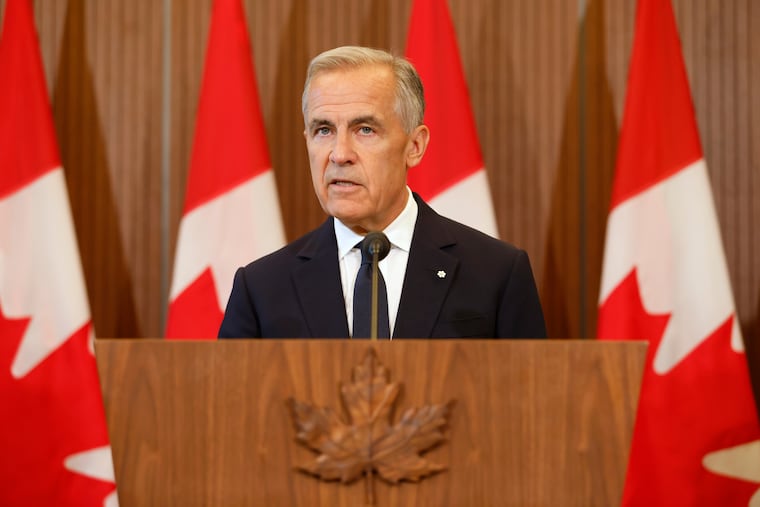
Canada to Implement Retaliatory Tariffs Amid Trump’s Threats to Intensify Trade Disputes.
OTTAWA, Ontario — After a protracted period of escalating tensions marked by public disputes and retaliatory threats, Canada is poised to impose new tariffs on various U.S. goods. These tariffs, affecting products worth approximately billion, are set to take effect shortly after midnight Eastern time on Tuesday, reflecting a significant escalation in trade hostilities between these long-standing allies.
Recent polling indicates robust support among Canadians for Prime Minister Mark Carney’s decision to halt trade negotiations with the United States last month, a move that many view as a necessary response to the imposition of U.S. tariffs on Canadian exports. However, there are rising concerns regarding the potential for further retaliation from the Trump administration. President Trump has made it clear that he is prepared to respond aggressively if Canada proceeds with its tariff plans.
Some industry leaders from Canada express apprehension over the likelihood that the U.S. might escalate its measures in response. A prominent voice in this discussion, Flavio Volpe, president of the Automotive Parts Manufacturers’ Association of Canada, underscored that U.S. officials may prioritize their own political agendas over economic consequences, suggesting that a tit-for-tat scenario could emerge, which would have severe repercussions for both economies.
Carney’s announcement of the tariffs followed a breakdown in negotiations in Washington that were intended to address U.S. tariffs of up to 50% on Canadian exports, particularly targeting automotive products, steel, and aluminum. The U.S. administration argues that their tariffs are a direct response to earlier retaliatory measures taken by Canada.
Amid these tensions, Carney characterized the current situation as Canada being “attacked” by the United States, stating that the two nations find themselves in a state of economic conflict. However, U.S. Treasury Secretary Scott Bessent dismissed this narrative, asserting that Canada lacks the economic heft to engage in a trade war with the United States.
As discussions regarding trade continues to simmer, Carney appears resolved to shift focus towards diversifying Canada’s trade relationships and bolstering its domestic economy, with little urgency to re-engage in negotiations with Washington. His administration has begun targeting U.S. goods with tariffs that reflect the items affected by U.S. tariffs on Canadian exports, emphasizing a strategic approach to these tensions.
The list of U.S. products slated for tariffs include items that may not significantly impact the Canadian economy, such as metal bands for pencils and fish egg incubators, potentially aimed at exerting political pressure on regions in the U.S. that supported Trump. Nevertheless, Canada’s broader economic landscape, particularly its trade relationships with major sectors like oil and gas, remains relatively insulated, as notable exemptions are still in place.
With global markets watching closely, the unfolding trade conflict highlights the complex interdependencies between Canada and the U.S. and raises questions about the potential long-term impacts of escalating trade barriers on both nations’ economies. As Canada moves forward with these tariffs, the situation continues to develop, with additional developments anticipated as both nations navigate this tumultuous economic landscape.
This article was produced by Media News Source.