
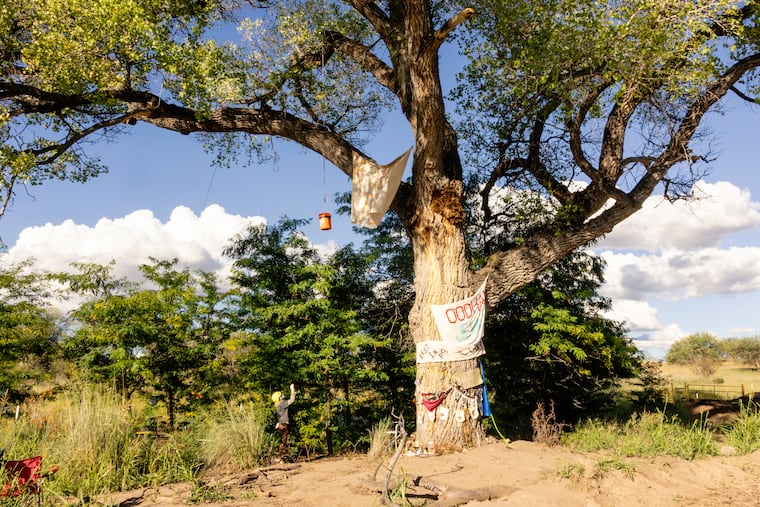
Border agents have removed a tree occupied by activists for several months, known as the ‘grandmother’ tree.
In Lochiel, Arizona, a dramatic confrontation unfolded recently that underscored the growing tensions surrounding President Donald Trump’s .5 billion border wall project. For over two months, a group of activists had taken up residence in the branches of a historic cottonwood tree near the U.S.-Mexico border, aiming to protect it from demolition by federal contractors. However, this standoff came to a tumultuous conclusion when Customs and Border Protection (CBP) agents raided the site, resulting in the felling of the tree, which activists estimated to be between 150 and 250 years old.
On Monday, footage recorded by the protesters captured the moment the towering cottonwood tree was destroyed as CBP agents looked on. Activists reported that around 50 agents participated in the operation, leading to at least 10 arrests and multiple citations for activists present at the scene for trespassing in a designated closure area.
Customs and Border Protection previously identified multiple trees in Lochiel for removal to facilitate the construction of the controversial border wall. Hilton Beckham, the agency’s assistant commissioner, stated that preconstruction surveys found no active migratory bird nests in the area. Despite the environmental implications of such projects, the Department of Homeland Security has waived numerous laws that could have dictated a more thorough environmental review.
Protesters emphasized that the removal of the cottonwood tree represented more than just the loss of a single tree; it signified a serious encroachment on one of Arizona’s last remaining riparian ecosystems. The cottonwood had become a symbol of resistance against the border wall, which activists argue disrupts essential wildlife corridors.
The activism surrounding the border wall has sparked a wider movement, with multiple groups emerging across various sectors of the border to oppose the construction. These efforts have gained support from environmental organizations, invoking a historical legacy of resistance to logging practices, where tree sits have played a critical role.
As of late September, construction had temporarily stalled about 300 feet from the cottonwood, largely due to the activists’ presence. The scene on Monday, characterized by a ritualistic ceremony at the camp, shifted dramatically as federal agents moved in, resulting in a chaotic encounter that activists described as both traumatic and galvanizing.
Despite setbacks, organizers remain determined to continue their efforts, seeking alternative, creative means of protest in the wake of the recent events. Many activists echo a sentiment of resilience, vowing to continue their fight for environmental protection and civil rights for as long as necessary.


