
Leaders of India’s Cockroach protest movement released from detention, pledge to continue demonstrations.
Leaders of a burgeoning youth movement in India are amplifying their demands for change following recent detentions at the hands of police amidst widespread protests over a contentious voter list revision. The Cockroach Janata Party, spearheaded by Abhijeet Dipke, Saurav Das, and Ashutosh Ranka, emerged as a voice for disenchanted youth, insisting on the resignation of Gyanesh Kumar, the Chief Election Commissioner.
The protests erupted after the Election Commission of India reported the removal of over 130 million voters from lists since the previous year, a move critics deem politically motivated. The ruling Bharatiya Janata Party (BJP) and the Election Commission have rejected allegations of manipulation, asserting that the voter list update is necessary to eliminate duplicate and ineligible entries.
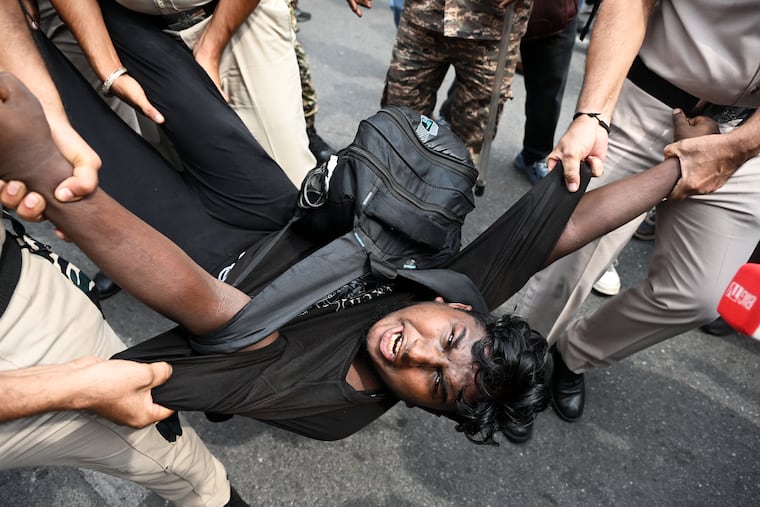
On Saturday, police took swift action against protest leaders upon their arrival in New Delhi from Mumbai. The leaders were detained as they prepared to lead a demonstration, but later released on the condition that they would cause “no breach of peace for one year,” a stipulation whose implications remain unclear regarding their future organizational activities.
In the aftermath of their release, the leaders vocalized their discontent towards Prime Minister Narendra Modi, scrutinizing his governance and calling for heightened civic engagement. Das, a spokesperson for the Cockroach movement, characterized the current atmosphere in India as one of conflict between the government and its citizens, urging supporters to mobilize in response.
The protests have led to significant security measures in New Delhi, with over 2,000 individuals detained, including numerous opposition lawmakers. The city experienced disruptions in train services, the closure of metro stations, and the suspension of mobile internet access in various areas in the wake of increasing demonstrative activities. While most of those detained were released by late Saturday, the tension remains high.
Small groups of protesters returned to the streets on Sunday, maintaining a presence in the city despite police interventions aimed at dispersing the gatherings. The Cockroach movement, which originated as a satirical response to derogatory remarks by India’s Chief Justice about unemployed youth, has grown into a substantial force advocating for the rights and recognition of young Indians.
Historically, the movement gained traction during the summer and previously succeeded in securing the resignation of Modi’s Education Minister, underscoring the group’s potential to influence political discourse. As protests continue, the Cockroach Janata Party remains resolute in its aims, signaling a heightened engagement from younger citizens disillusioned with the current political landscape in India.
As this situation develops, the underlying tensions between the youth and the government highlight broader issues of representation and electoral integrity in the world’s largest democracy.


