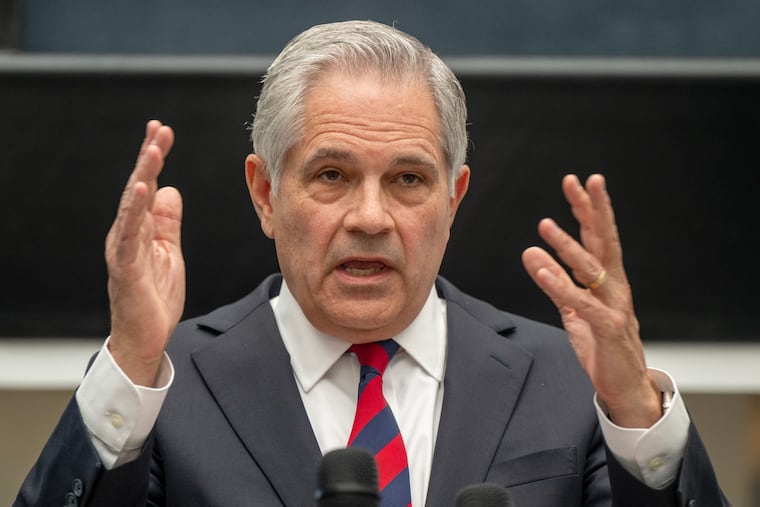
Larry Krasner resumes aggressive stance amid ongoing challenges to his leadership as Philadelphia District Attorney.
On Tuesday, Philadelphia will come together to mourn the loss of Officer Shane Seiber, a 40-year-old member of the Philadelphia Police Department (PPD) who was fatally shot while on duty in West Philadelphia. Seiber, who leaves behind a wife and two young children, will be honored with a funeral that adheres to the longstanding traditions of the department, characterized by a dignified ceremony attended by fellow officers and community members.
However, the context surrounding Officer Seiber’s tragic death is marked by controversy and heated debate. District Attorney Larry Krasner has publicly placed blame for the incident on the actions of two police officers, whom he accused of engaging in “arguably criminal” behavior related to the case against Eric Lewis. Lewis, a water department employee charged with the killing of Seiber and the injuring of another officer, is at the center of a tumultuous legal situation that has drawn scrutiny towards both the police and prosecution.
Krasner’s comments came amid rising tensions between his office and the PPD, particularly following criticisms of the prosecutors during Lewis’s recent murder trial. The trial, described as poorly handled by experts, has led many to question the efficacy of the District Attorney’s office in managing such high-stakes cases. Krasner’s decision to publicly assign blame while Officer Seiber’s family is mourning reflects a potential shift in the relationship between prosecutors and law enforcement in a city already rife with challenges in public safety and criminal justice.
The backdrop of this unfolding narrative includes Krasner’s recent struggles, which range from reprimands by the state Supreme Court to potential investigations involving his conduct in office. As the fallout from Officer Seiber’s death continues, questions loomed regarding organizational accountability within both the police department and the district attorney’s office. This situation is compounded by the sealing of evidence from the 2023 case, which has stifled public discourse on the specifics surrounding the alleged misconduct.
In the wake of these events, the PPD is expected to conduct thorough reviews of past cases led by the homicide detective involved, and the community will be watching closely to see how this situation develops. The tragic events have underscored not only the risks faced by police officers on duty but also the intricate interplay of accountability within law enforcement and the judicial system. The tension between protecting citizens and ensuring justice continues to be a critical issue in Philadelphia, as the community grapples with both grief and questions that demand answers moving forward.
As this situation evolves, the role of law enforcement and the district attorney’s office in upholding public safety remains a focal point for both authorities and citizens alike. Those following this case are encouraged to continue monitoring updates as the fallout develops in what is likely to be a protracted discourse around policing and community relations in Philadelphia.