Philadelphia Ballet concludes the season showcasing precision, beauty, and highlighting significant moments in ballet history.
Philadelphia Ballet recently concluded its 2024-2025 season with an engaging showcase that blended lyrical escapism with a nod to ballet history. The performance, curated by Artistic Director Angel Corella, featured two distinct works: the Romantic-era ballet La Sylphide, crafted in the 1830s, and Études, a 1940s piece celebrated for its exploration of classical ballet technique.
Opening night at Philadelphia’s historic Academy of Music revealed a few challenges in audience comprehension, as attendees were reportedly misled by program notes leading some to believe they were only experiencing La Sylphide, despite both ballets prominently featuring sylphs. Consequently, several seats remained empty as Études commenced, a factor worth noting in the context of audience engagement.
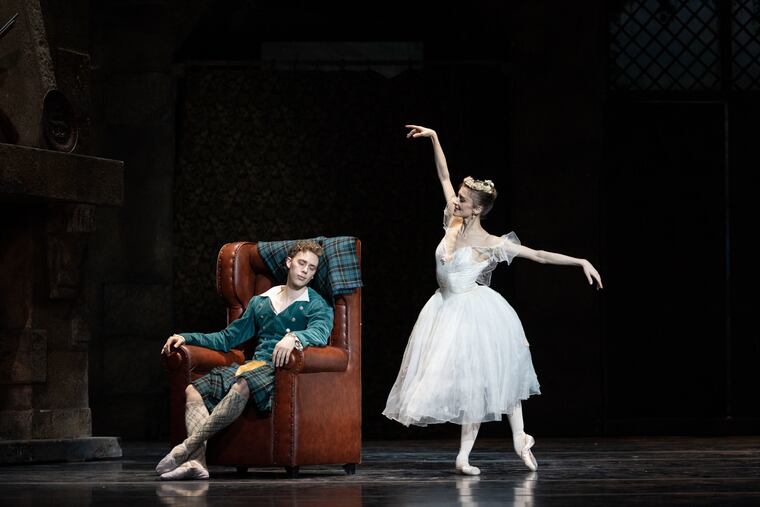
La Sylphide, a cornerstone of classical ballet repertoire, tells the poignant tale of James, a Scottish man who, on the eve of his wedding, becomes enchanted by a supernatural sylph, ultimately leading him into the forest in pursuit of a life defined by dreams rather than reality. This production marked a significant return for the Philadelphia Ballet, which first performed the piece in 1985 but had not revisited it for years. Corella’s vision to revive this narrative ballet aligns with his objectives to enrich the company’s offerings.
The ballet, originally choreographed by Danish maestro August Bournonville and set to music by Herman Severin Løvenskiold, embodies the contrast between a grounded mortal and the ethereal sylph, whose very existence hinges on the distance between them. The ensemble’s performance highlighted Bournonville’s signature emphasis on batterie, a series of rapid, airborne movements that demand both skill and grace. Dancer Jack Thomas particularly shone in executing these intricate footwork patterns.
Oksana Maslova’s portrayal of the sylph was noteworthy, embodying the delicacy and precision that the role demands, reminiscent of the original interpreter, Marie Taglioni. Meanwhile, Thays Golz’s performance as Effy, the jilted bride, captivated the audience with her charm and presence, delivering a performance that resonated deeply with audience members even in the absence of traditional ballet attire.
La Sylphide is often classified among ballet’s “white ballets,” characterized by the use of ethereal white tutus which can sometimes limit representation within classical roles. However, Corella’s commitment to inclusivity resulted in a diverse array of dancers portraying the sylphs, each contributing to the ensemble’s unified aesthetic.
Following La Sylphide, the performance transitioned to Études, choreographed by Harald Lander and accompanied by music from Knudage Riisager, based on compositions by Carl Czerny. This ballet opens in a manner reminiscent of a traditional ballet class, beginning with foundational exercises, such as pliés, while gradually revealing a more polished performance from the dancers.
The execution of Études requires exceptional technical precision, a demand that the Philadelphia Ballet met with commendable skill. Notable performers included Sydney Dolan as the lead ballerina, alongside principal dancers Sterling Baca and Ashton Roxander. Their performances exhibited a level of mastery that enriched the overall presentation, while Roxander’s standout solo towards the conclusion of the piece showcased a burgeoning talent poised for future success.
Overall, this dual-ballet program not only provided an escape into the historical and narrative depths of ballet but also reaffirmed the Philadelphia Ballet’s commitment to both tradition and innovation within the art form. The season finale was a celebration of technical prowess and imaginative storytelling, marking a successful close to an ambitious performance year.
For those wishing to experience the artistry of the Philadelphia Ballet, performances can be attended at their venue located at 240 S Broad St, Philadelphia, PA, with ticket prices ranging from approximately .25 to 2.25. For further information, potential attendees can reach out at 215-893-1999 or visit the website at ensembleartsphilly.org.
Media News Source