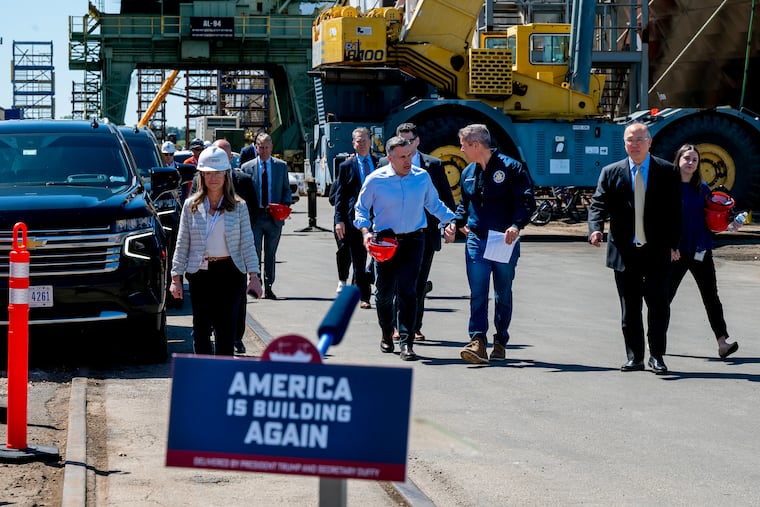
Shipyard owners in South Philly plan expansion, aiming to double employment opportunities.
As Congress moves to bolster public investment in U.S. shipyards, Hanwha, a prominent South Korean shipbuilder, has announced a substantial commitment of over million aimed at modernizing two extensive former Navy dry docks located in South Philadelphia. The initiative is designed to revolutionize shipbuilding at this facility, increasing production capacity from one vessel every eight months to nearly one ship per month. This ambitious plan was detailed during Hanwha’s recent presentation to investment analysts in Seoul.
The company intends not only to refurbish the Philadelphia Shipyard but also to establish additional facilities along the Delaware River, with a goal of constructing the first domestically produced liquid natural gas (LNG) carriers. This proposed expansion is projected to escalate annual revenues from shipbuilding in Philadelphia to billion, an impressive increase from less than 0 million recorded in the previous year. Moreover, Hanwha is exploring the establishment of its own shipping fleet, a strategy aimed at retaining skilled labor during industry downturns.
The construction of double-hulled, multi-tanked LNG vessels necessitates sophisticated marine welding and robust cooling and power systems. Hanwha has expressed intentions to more than double its workforce at the Philadelphia yard to approximately 4,000 employees by the year 2034, focusing on hiring design engineers and marine welders, among other specialized roles. LNG carriers, which transport gelled natural gas at cryogenic temperatures, play a crucial role in the export of U.S. gas to various international markets.
Furthermore, Hanwha envisions the potential development of unmanned vessels for the U.S. Navy. The company has previously undertaken updates to various Navy vessels, aligning with the current defense emphasis on seagoing drone technology amidst growing concerns regarding the vulnerabilities of traditional naval assets.
Employment at the Philadelphia Naval Shipyard had reached 1,700 prior to Hanwha’s investment, which was completed last year for 0 million, a figure significantly lower than the federal and state subsidies that have historically underpinned this commercial shipbuilding sector. To facilitate the construction of larger ships, Hanwha is seeking additional space beyond its current holdings, which include two of the largest dry docks at the site.
In light of the global shipbuilding landscape, which has increasingly faced competition from low-cost manufacturers in China, U.S. lawmakers have recently reintroduced the Shipbuilding and Harbor Infrastructure for Prosperity and Security (SHIPS) Act. This legislation aims to establish a federal strategy to revitalize U.S. shipyards through grants, subsidies, and coordinated investment, thereby addressing national security concerns related to dependency on foreign shipbuilding capacity.
The ongoing developments in Philadelphia signal a pivotal moment for the region’s shipbuilding industry and may herald a significant revitalization of its maritime assets. As local leaders and stakeholders engage with federal initiatives, the potential for a renaissance in U.S. shipbuilding traditions continues to grow. Enhanced federal support, combined with strategic investments in nearby industrial sites, could further propel the transformation of the Philadelphia area into a central hub for maritime innovation and production.
In summary, Hanwha’s investment and the supportive legislative framework represent a concerted effort to reinvigorate America’s shipbuilding capability, ensuring it remains competitive in a dynamic global market. As domestic producers work to establish a prominent position, the future of U.S. naval construction appears poised for substantial growth.