
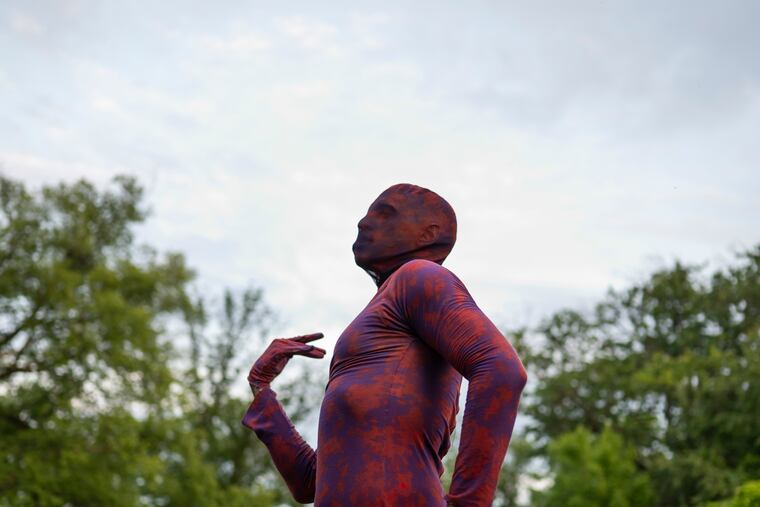
Outdoor dance performance explores Bartram’s Garden’s complex legacy this weekend.
Bartram’s Garden, a historic botanical site nestled along the Schuylkill River in Southwest Philadelphia, will host a transformative dance performance series this weekend, titled “Venus Flytrap.” This four-day event serves as a platform to explore the complex legacy of John Bartram, the founder of the oldest surviving botanical garden in North America.
Kicking off the series, multidisciplinary artist Joiri Minaya, in partnership with BlackStar Projects and the Fabric Workshop and Museum, has created an immersive environment adorned with large canopies. These intricately designed fabrics, featuring vibrant floral patterns, set the stage for performances that delve into themes of labor and colonialism as they relate to Bartram’s legacy. Visitors to the site can engage not only with the aesthetic beauty of the installation but also with its profound social commentary on historical inequities.
Strategically located near the Harvey Memorial Garden— the burial site of an enslaved Black man— this performance space evokes the often overlooked contributions of marginalized communities to Bartram’s Garden. Historical accounts describe Bartram as having freed his gardener Harvey, who continued to work in the garden until his death. This ambivalence in Bartram’s narrative highlights the contradictions of his character, shedding light on issues of race and labor in America’s past.
Minaya’s exploration is supported by ongoing research at Bartram’s, which seeks to uncover the identities of those who played crucial roles in tending to the garden, including free Black Philadelphians and enslaved individuals. Funded over three years by the Pew Center for Arts & Heritage and the William Penn Foundation, “Venus Flytrap” presents an artistic inquiry into these erased histories, linking them with contemporary experiences of people of color.
The performance features six contemporary dancers adorned in colorful, skintight bodysuits that symbolize the constraints of manual labor. Led by Philadelphia choreographer Jonathan González, the dancers mimic the movements of both indigenous and African plants significant to Black and Indigenous communities. This group choreography unfolds as a commentary on societal pressures and oppressive labor histories.
As the performance progresses, the dancers transition from rigid positions representing forced labor to more liberated movements, ultimately engaging with the audience in a celebration of joy and freedom. The final moments depict the performers atop tree branches, symbolizing their release from historical confines.
Minaya has also integrated her vision into the physical space through the canopies, intending to create a sanctuary for reflection and respite for visitors. The notion of leisure and rest is especially poignant, considering the historical context of labor in the garden.
Although the performances wrap up on Sunday, the colorful canopies will remain on display throughout the summer, accompanied by additional events. Minaya has collaborated with ITA Leisure Goods to produce blankets and bandannas featuring similar plant-inspired designs for sale, further expanding the narrative of decolonization and relaxation that permeates the project.
For audiences engaging with this artistic endeavor, the hope is that they will not only appreciate the aesthetic elements but also deepen their understanding of the colonial dynamics that shaped Bartram’s Garden. The “Venus Flytrap” series thus serves as an invitation to reflect on the painful legacies of the past while envisioning a more inclusive future.
“Venus Flytrap” performances will take place through Sunday, June 1, at Bartram’s Garden, located at 5400 Lindbergh Blvd., Philadelphia. For additional information, visit the Bartram’s Garden website.


