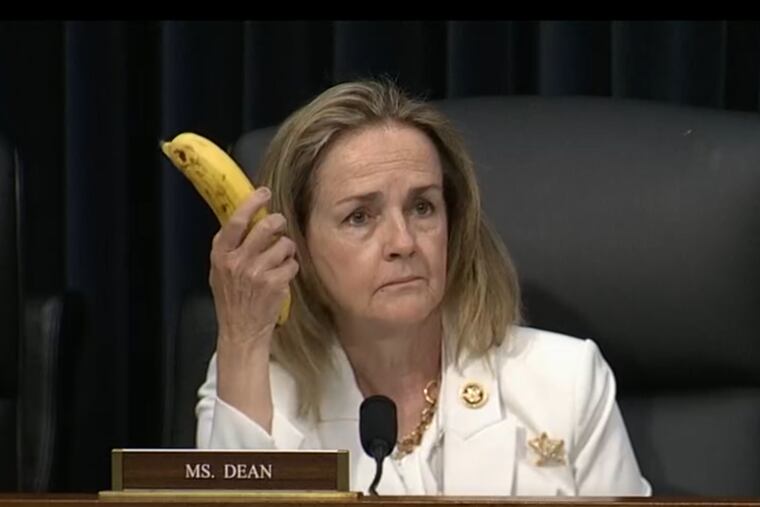
Pennsylvania Democrat Madeleine Dean questions Trump’s Commerce Secretary about banana trade issues during congressional hearing.
In a recent House Appropriations subcommittee hearing, U.S. Representative Madeleine Dean from Montgomery County, Pennsylvania, engaged in a spirited exchange with Commerce Secretary Howard Lutnick, highlighting the complexities surrounding tariffs and their impact on American consumers. The discussion pivoted around a seemingly innocuous topic—bananas, a staple that exemplifies the broader implications of international trade policies.
Dean, while holding a banana, questioned Lutnick about the tariff imposed on this popular fruit, which she noted is a significant import for American consumers, with billions purchased annually. Lutnick responded that the tariff stands at approximately 10%, a rate that Dean argued has led to a considerable price increase at retail outlets, citing Walmart’s reported 8% increase on bananas in response to the tariffs.
The representative further emphasized the disconnect between domestically produced and imported goods, stating, “If you build in America, there is no tariff,” to which Dean rebutted that bananas cannot be cultivated in the U.S. at a scale that meets demand. Currently, U.S. banana production is limited to about 3,500 tons annually, primarily from regions like Hawaii and Florida. In contrast, Guatemala, the leading supplier to the U.S. market, produces approximately 4.8 million tons each year, as reported by the World Population Review.
Following the exchange, Dean took to social media to stress the reality that while America excels in various industries, banana production is not one of them. She articulated her concerns regarding tariffs, asserting that they penalize consumers for opting for quality goods that are not domestically available.
This incident reflects a broader debate within Washington regarding tariffs and their economic ramifications, particularly under the previous administration. Dean’s remarks illustrate the challenges lawmakers face in balancing trade policies with consumer needs while navigating the complexities of domestic production capabilities.
As tariffs continue to be a hot-button issue, the dialogue initiated by Dean and Lutnick underscores the pressing need for informed discussions on trade policies that directly affect daily American life.