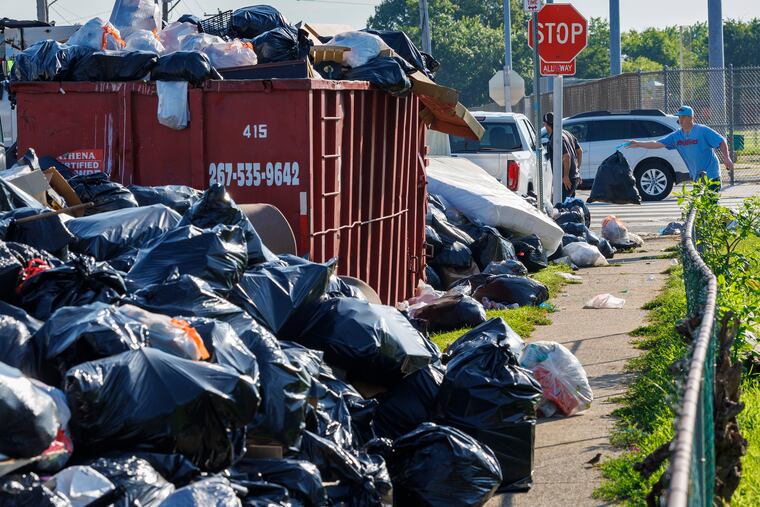
Philly trash pickup resumes after strike; key questions answered.
The recent strike by city workers in Philadelphia, marking the first significant labor action of its kind since 1986, has officially concluded. Union employees, which include approximately 9,000 individuals in roles such as trash collection, 911 dispatching, street repair, and library staffing, are set to return to their posts following a successful negotiation between union leaders and city officials.
This strike lasted a total of eight days and four hours, culminating in a deal reached around 4 a.m. on Wednesday. The negotiation was led by Mayor Cherelle L. Parker and Greg Boulware, president of the American Federation of State, County and Municipal Employees District Council 33. This recent labor action stands in stark contrast to a much longer strike in 1986 that lasted 20 days and resulted in approximately 45,000 tons of refuse accumulating throughout the city.
Union members will resume their responsibilities immediately, though the exact timeline for the normal resumption of trash pickup and other services remains uncertain. In the interim, many residents are left wondering when routine operations will be reinstated and how the strike has affected services such as library access and recreational facilities.
Under the terms of the newly ratified three-year contract, the union members will receive annual raises of 3%. This figure aligns closely with the mayor’s goals throughout the negotiation process but remains slightly below the union’s initial request of a 5% increase. Notably, the contract also introduces a fifth step in the union pay scale, a provision anticipated to result in a wage boost of about 2% for long-serving members.
The agreement did not, however, alter the city’s contribution to workers’ healthcare benefits, which will stay at ,500, despite union demands for an increase to ,700. Additionally, the contentious residency requirement for city employees, stipulating that they must reside within Philadelphia’s limits, remains unchanged.
City pools, which were severely impacted by the labor stoppage, saw their operational capacity strained, reducing the number of open facilities from approximately 60 to about 30 during the strike. With workers now returning, there is hope that full service will be restored soon, though the exact status of public resources like the libraries, which were largely closed, requires clarification.
In summary, while the city of Philadelphia prepares to return to normalcy, the impacts of the strike and the terms of the new contract will continue to shape city employee relations and service delivery moving forward. Residents are encouraged to stay informed as updates regarding service resumption become available.