Absalom Jones service carries deeper significance for his church this year.
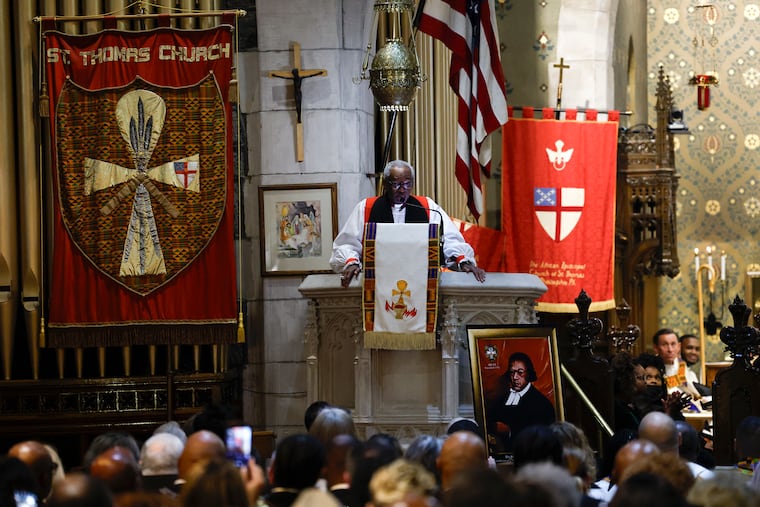
As the African Episcopal Church of St. Thomas gathered to honor its founder, Rev. Absalom Jones, this year’s celebration took on a notably political significance. Parishioners filled the pews at the Overbrook Farms church to commemorate Jones, recognized as the first Black ordained priest in the Episcopal Church. The occasion was marked by heightened awareness due to recent events regarding the historical representation of enslaved individuals at the President’s House on Independence Mall, as noted by the church’s rector.
The National Park Service recently dismantled an exhibit that had memorialized the lives of nine enslaved people at the nation’s first presidential residence. This exhibit showcased the Atlantic slave trade and highlighted the role of President George Washington in perpetuating the institution of slavery, while also honoring prominent early Black figures such as Jones and Richard Allen. The removal of this exhibit is part of a broader initiative under former President Donald Trump, aimed at eliminating content deemed disparaging to American history—a move that has been criticized as an effort to sanitize the historical narrative by downplaying the realities of slavery.
At the center of the service was a 35-minute sermon delivered by Rt. Rev. Michael Curry, the former presiding bishop of the Episcopal Church. His address touched on contemporary issues, ranging from cultural events to social justice in the context of immigration enforcement. Curry emphasized the importance of resilience in advocacy for freedom and justice across America, encouraging attendees to remain steadfast in their collective pursuit of equality.
The service also featured performances by youth singers from Minnesota and included faith leaders from other Philadelphia institutions. Jones and Allen, both former slaves who became prominent lay preachers in the 18th century, jointly founded the Free African Society after facing racial discrimination in their worship practices. Despite their struggles, they established their own parishes—Jones with St. Thomas and Allen with Mother Bethel A.M.E. Church.
The historical narratives that defined the President’s House site had previously spotlighted the complexities of American freedom, a theme particularly poignant ahead of the upcoming Semiquincentennial celebrations, which will elevate Philadelphia’s role in national history. The city is actively challenging the removal of these exhibits through legal means, arguing for their preservation as crucial elements of the nation’s history.
Rev. Martini Shaw, the rector of St. Thomas, remarked on how this year’s celebration has taken on a profound new significance, reinforcing the commitment to honoring history amidst attempts at erasure. The congregation remains dedicated to recognizing and celebrating the enduring legacy of Absalom Jones and his contributions to both the church and the broader fight for justice.
Media News Source