
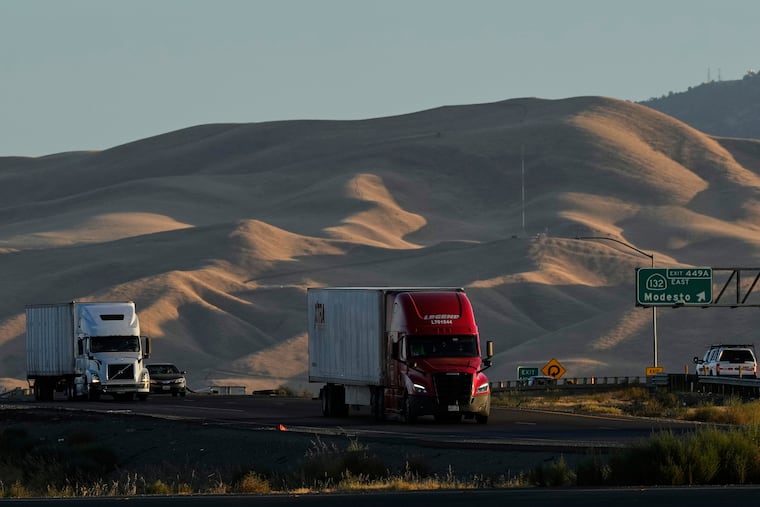
All truck and bus drivers must pass commercial driver’s license tests in English moving forward.
In a significant shift, the Trump administration has mandated that all truck drivers and bus drivers take their commercial driver’s license (CDL) tests in English. This initiative is part of a broader campaign aimed at enhancing safety standards within the trucking industry and eliminating unqualified drivers from the roads. Transportation Secretary Sean Duffy announced these new requirements, stressing the importance of English proficiency for drivers to read road signs and communicate effectively with law enforcement officers.
Currently, many states permit drivers to take their licensing examinations in multiple languages, despite insisting on English proficiency for safety regulations. For instance, California has provided tests in as many as 20 languages. Secretary Duffy highlighted that some states have contracted third-party companies to administer these tests; however, these firms have allegedly fallen short in enforcing federal standards regarding English language proficiency and driving skills.
The announcement comes on the heels of a recent Department of Transportation review, which identified 557 driving schools lacking compliance with essential safety regulations and recommended their closure. This crackdown follows a tragic incident in August when a driver, allegedly unauthorized to operate within the country, caused a crash in Florida that resulted in three fatalities. Similar accidents have intensified scrutiny regarding the effectiveness of current regulations and licensing standards.
Under the new enforcement measures, states are expected to perform thorough checks to ascertain drivers’ English-speaking abilities before issuing a commercial license. Enforcement authorities are also directed to assess language skills during traffic stops or inspections, with disqualifications occurring for those unable to communicate adequately. Earlier federal inspections indicated that nearly 500 drivers were disqualified based on these language capabilities. States like California have already begun to enforce these new standards, having removed over 600 drivers from their highways.
To bolster safety measures, the administration aims to prevent fraudulent companies from entering the trucking industry. Duffy mentioned plans to enhance the registration process and requirements, alongside increasing inspections of trucks and CDL institutions. This initiative also seeks to ensure the accuracy of electronic logging devices utilized by drivers and conformance with state regulations governing the issuance of commercial licenses.
An ongoing concern is the existence of so-called “chameleon carriers,” companies that evade regulatory scrutiny by changing names and registration details to continue operations after violations or incidents. Industry experts, including those from the American Trucking Associations, have pointed out that the current system makes it too easy for questionable operations to persist without adequate enforcement.
The Federal Motor Carrier Safety Administration (FMCSA) has already conducted targeted actions following related fatal incidents, leading to disqualifications of specific companies connected to violations. As efforts intensify, the truck driving community and regulatory bodies are urged to work collaboratively to ensure that only qualified drivers are entrusted behind the wheel of large commercial vehicles, thereby safeguarding public safety on the roads.
These developments underscore an escalating commitment to improving the safety standards within the trucking industry, a move that many stakeholders hope will alleviate the troubling statistics associated with road incidents linked to unqualified drivers.
Media News Source.


