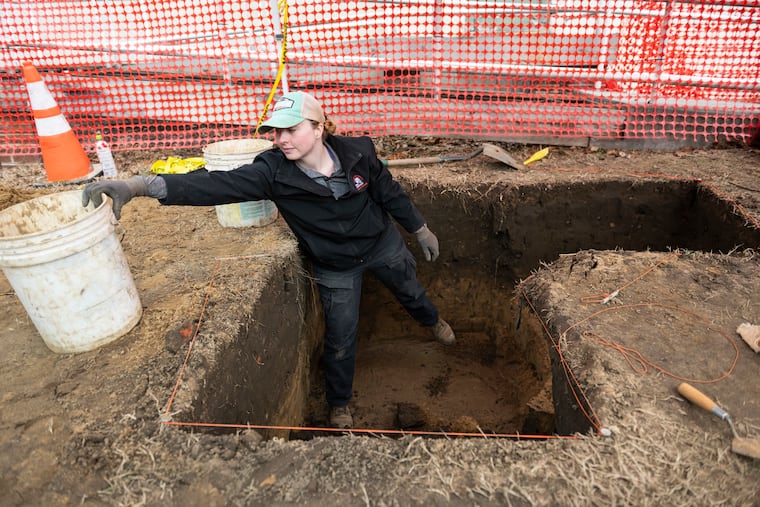
Archaeologists at Croft Farm in Cherry Hill search for Underground Railroad artifacts.
At Croft’s Farm, an archaeological excavation has unearthed layers of history that span thousands of years, revealing a complex narrative of cultural heritage in what is now Cherry Hill, New Jersey. Described merely as an L-shaped hole at first glance, the excavation site holds crucial insights into the lives of its past inhabitants, ranging from Indigenous peoples to abolitionists.
Croft’s Farm is recognized as a national historic site, dating back to the mid-1800s, when its owners provided assistance to enslaved individuals seeking freedom through the Underground Railroad. Today, the 80-acre property is maintained by Cherry Hill Township and serves as a valuable recreational and educational resource for the community.
The excavation process, led by archaeologist Matt Kraemer, reveals two distinctive layers of soil, each rich with artifacts. The upper layer, described as silty sand, contains remnants from the past three centuries, reflecting the dual existence of both slaveowners and those committed to emancipation. Beneath lies a lighter sediment that holds artifacts dating back to the Lenni-Lenape Indigenous peoples, who originally inhabited this area along the Cooper River.
This site’s significance lies not only in its historical relevance but also in its potential as an educational venue. Matthew Tomaso, the archaeologist overseeing the project, emphasizes the importance of understanding the farm’s role in the broader context of the Underground Railroad. While initial excavations focused on preventing groundwater from damaging the farmhouse, they now present an opportunity to uncover the stories of both enslaved individuals, such as Joshua Sadler, who sought refuge on the property, and the Quaker family of Thomas and Josiah Evans, known for their abolitionist work.
The artifacts recovered thus far—including animal bones and shards of pottery—are critical in reconstructing the daily lives and dietary customs of those who lived there. For instance, Chelsea Carriere, another archaeologist on the project, has been analyzing bone fragments, which indicate local butchering practices and hint at the socioeconomic status of the farm’s inhabitants. Recent finds include tools believed to be over 2,000 years old, revealing the site’s ancient legacy.
The excavation also engages local residents in the experience, fostering a connection between contemporary citizens and their historical counterparts. Public demonstrations provided an opportunity for hands-on learning, allowing community members, like Cherry Hill resident Debbie Kilderry, to connect with the past.
As archaeologists continue to probe the depths of Croft’s Farm, every artifact recovered serves to illuminate a poignant chapter in American history, reflecting the intertwined stories of freedom seekers, Native peoples, and abolitionists. With each dig, they not only seek to understand what life was like centuries ago but also honor the legacy of those who walked the land long before.
The ongoing archaeological efforts at Croft’s Farm exemplify the critical role of historical preservation in today’s society, highlighting the importance of understanding history for future generations. As these explorations continue, they promise to reveal insights that may redefine our comprehension of regional and national narratives related to slavery, freedom, and cultural identity.
Media News Source