Architect of the President’s House opposes potential removal of Trump administration exhibit slated for next month.
Concerns are escalating regarding the future of the President’s House Site in Independence National Historical Park amid initiatives from the Trump administration that threaten the integrity of its exhibits. The site, located in close proximity to the iconic Liberty Bell, is significant for its portrayal of the nine enslaved individuals held by President George Washington. It employs multimedia exhibits, including videos, illustrations, and informational panels, to illuminate the complex narratives of slavery juxtaposed with ideals of freedom that characterized the founding of America.
Troy C. Leonard, a partner and principal at Kelly Maiello Architects, who played a crucial role in designing the memorial nearly two decades ago, expressed his dismay upon learning that certain exhibits would be subject to review under directives aimed at revising historical narratives perceived as negative. Leonard lamented that the meticulous work dedicated to the project could potentially undergo alterations that would undermine its authenticity.
Indeed, six displays related to slavery have been flagged for governmental review, following President Donald Trump and Interior Secretary Doug Burgum’s recent order to examine content that could be construed as disparaging toward American history. This decision has raised alarms among advocates for historical accuracy, as the fate of these materials hangs in the balance. The administration hinted at possible changes, which may include removal or modifications of content before the end of the month.
Public reactions have intensified in light of Trump’s critical remarks regarding federally funded museums that address slavery and historical injustices. He characterized such discussions as overly negative, suggesting they overshadow positive narratives of American success and optimism.
Leonard emphasized that any alterations to the design or content would be met with resistance from his firm, pointing out the extraordinary effort that went into the original execution of the President’s House project. This joint endeavor involved substantial collaboration among architects, historians, and artists, resulting in a tribute that was both thorough and respectful.
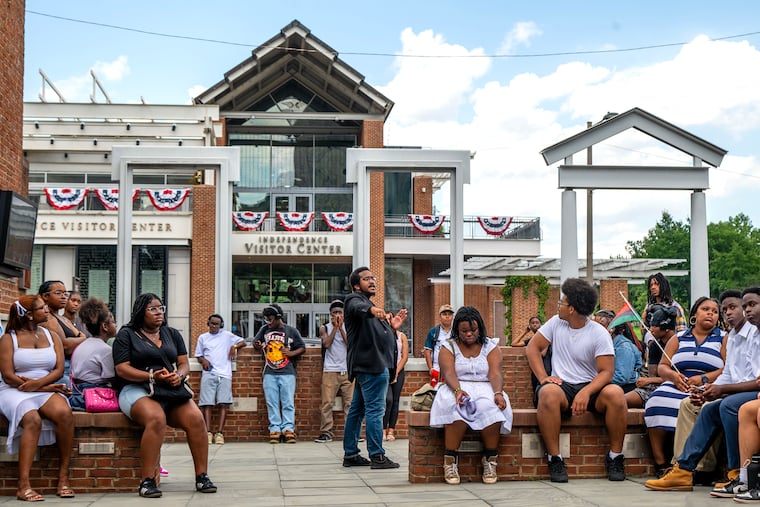
In the wake of these uncertainty regarding potential changes, Leonard and his colleagues are joining forces with community activists to safeguard the integrity of the President’s House. Roz McPherson, who served as the project director, is part of a coalition advocating for the preservation of the site’s historical truths, with plans for a public forum to address these vital issues.
As Philadelphia prepares for the 250th anniversary of the nation in the upcoming year, the significance of addressing historical injustices remains paramount. Efforts to shield the President’s House and its exhibits from political interference are gathering momentum, underscoring the broader implications of how history is preserved and presented to future generations. The complexities surrounding this debate not only reflect on the nature of American history but also speak to the ongoing dialogue about equity and representation within historical narratives.
The landmark site remains a critical space for reflection and education, capturing the nuanced history that shaped the nation, and the stakes of its presentation have never been higher. As discussions continue, the commitment to maintaining an accurate portrayal of America’s past stands as a testament to the diligence and passion of those who dedicated themselves to the project.