Artists in Pennsylvania Draw Inspiration from Local Rivers for Their Creations
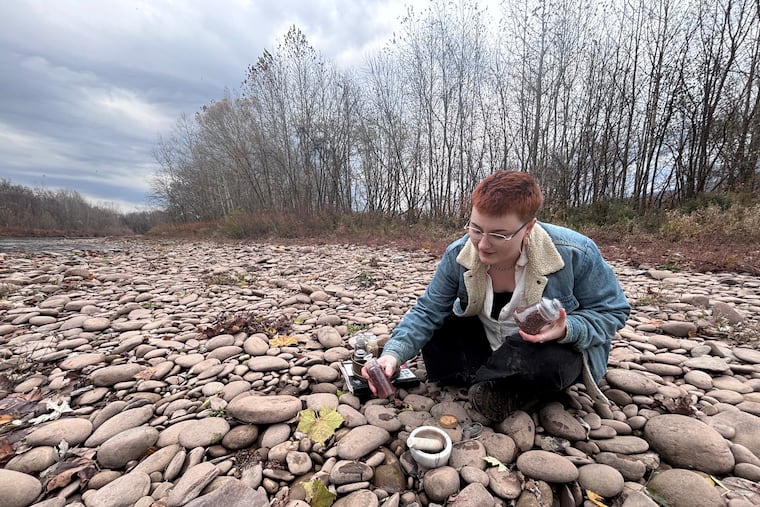
Montoursville, Pennsylvania – On a brisk November afternoon, the landscape along Loyalsock Creek presented a muted palette of browns and grays, punctuated by fleeting yellow and orange leaves fluttering in the wind. This seemingly drab environment, however, takes on a richer significance through the eyes of artists, such as Sierra Weir from Pittsburgh.
Weir, an accomplished pigment artist and community outreach coordinator for the nonprofit organization Three Rivers Waterkeeper, perceives this landscape uniquely. With an academic background in biochemistry, she emphasizes the nuanced beauty hidden within natural colors. Her artistic vision encompasses the intricate variations of earthly tones, leading her to celebrate the myriad shades of brown often overlooked by the untrained eye.
In June, Weir was recognized by the Pennsylvania Environmental Council as part of its inaugural artist-in-residency program, titled “Reflections through Art: Inclusive Access on Water Trails in the Susquehanna Basin.” Designed to promote environmental engagement through artistic expression, this initiative aims to bridge communities with their natural surroundings.
Alongside Weir, other artists, including painter Spencer Verney from Coatesville and Meg Lemieur from Port Richmond, were selected for the residency. Verney’s work focuses on the intersection of preserved lands and historical contexts, while Lemieur’s project involves illustrating a detailed map of the Swatara Creek Watershed, showcasing the unique flora and fauna of the area.
Tali MacArthur, a senior program manager for the Pennsylvania Environmental Council, articulated the residency’s purpose of fostering public participation in watershed conservation. By appealing to those who may not identify as traditional conservationists—scientists, anglers, or environmental activists—the program seeks to resonate with artists, musicians, and visual learners.
The residency program, which is financed through the Chesapeake Gateways Grant Program of the National Park Service and the Pennsylvania Department of Conservation and Natural Resources Community Conservation Partnership Program, promotes a fresh approach to conservation.
Weir’s commitment to using natural pigments—such as those derived from goldenrod and black walnut—stemmed from her desire to counter the environmental impact of synthetic paints. Her artistic journey includes a year devoted to studying the pigments of Betta fish, resulting in works inspired by the vibrant hues of nature.
At 28, Weir aspires not only to create art but also to enhance people’s awareness of their connection to the environment. She hopes her work will help individuals develop their “noticing skills,” allowing them to appreciate the intricate relationships between water, earth, and the living organisms surrounding them. Through her efforts, Weir aims to repair the ties that unite humanity with the natural world, highlighting our shared biological and chemical origins.
This artistic residency initiative stands as a testament to the potential for creativity to elevate environmental consciousness and community involvement in Pennsylvania’s waterways.
Media News Source