Baby KJ’s gene-editing treatment recognized among the top 10 breakthroughs in nature research.
In a groundbreaking medical achievement, a Philadelphia-area infant, known as Baby KJ, has gained international attention following the successful treatment of his rare and life-threatening liver condition through a gene-editing drug. Doctors from the Children’s Hospital of Philadelphia and Penn Medicine developed a novel approach to address KJ’s severe carbamoyl phosphate synthetase 1 (CPS1) deficiency, which poses a significant threat to infants due to the risk of toxic ammonia levels accumulating in the bloodstream, potentially leading to severe brain damage and fatality.
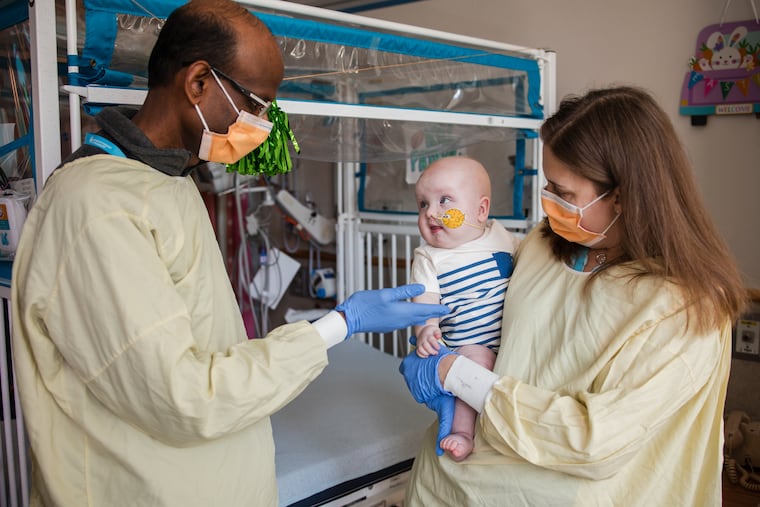
After spending more than 300 days hospitalized, KJ Muldoon was discharged and returned to his family in Drexel Hill. His remarkable journey has earned him recognition as one of the ten influential figures who have significantly impacted medicine in 2025, an honor bestowed by the scientific journal Nature, which referred to him as a “trailblazing baby.”
KJ’s medical condition, a rare genetic disorder, inhibits his liver from processing protein effectively. This has dire consequences, as even modest protein consumption may result in life-threatening ammonia levels. In light of the limited treatment options available and the urgency of KJ’s situation, his medical team proposed an experimental treatment utilizing advanced gene-editing technology. The strategy involved pinpointing the genetic mutation responsible for the enzyme deficiency and infusing tailored genetic material into KJ’s system, potentially rectifying the issue.
Within six months, researchers successfully formulated a customized drug using CRISPR technology. This tool allows for precise modifications to DNA, akin to a ‘find-and-replace’ function in text editing. KJ underwent three doses of this innovative medication, experiencing significant improvements in his liver function. His recovery journey culminated in his return home, marking a substantial milestone for both him and his family.
KJ’s treatment represents a significant advancement in personalized medicine, offering glimpses into the future of therapeutic options for rare genetic disorders. The groundbreaking nature of this treatment, which is specific to KJ’s unique genetic mutation, underscores the potential for CRISPR technology to pave the way for similar bespoke treatments for other patients facing rare diseases.
Looking ahead, Kiran Musunuru, director of the Penn Cardiovascular Institute’s Genetic and Epigenetic Origins of Disease Program, along with Rebecca Ahrens-Nicklas from CHOP’s Gene Therapy for Inherited Metabolic Disorders Frontier Program, are embarking on a new clinical trial to explore CRISPR’s applicability in treating other genetic disorders. Their work aims to create tailored therapies that could offer hope to numerous individuals battling rare genetic conditions, paving the way for future innovations in gene therapy. This remarkable narrative reflects not only a leap in scientific achievement but also the profound impact of personalized medicine on enhancing patient care and outcomes.