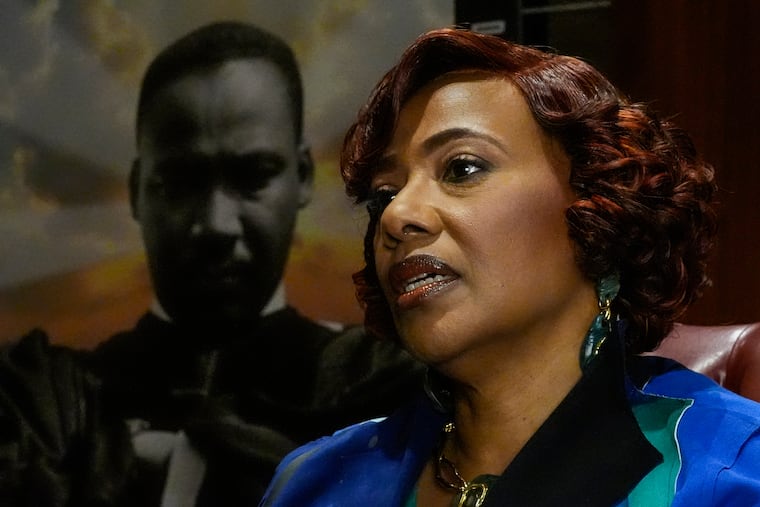
Bernice King highlights the significance of Martin Luther King Jr. Day in today’s political climate.
In the context of political unrest and societal division, the recognition of Martin Luther King Jr. Day carries particular significance this year. The Rev. Bernice King, daughter of the late civil rights leader and CEO of the King Center in Atlanta, characterized the holiday as a vital reminder of hope and moral integrity in current turbulent times. Highlighting the relevance of her father’s teachings, she emphasized the importance of confronting injustices and fostering a sense of humanity amidst widespread inhumanity.
This year’s observance comes as the nation nears the first anniversary of President Donald Trump’s second term in office. Rev. King pointedly referenced the “three evils” of poverty, racism, and militarism, which her father identified in a pivotal 1967 speech. She expressed concern that these issues are manifesting through policies and actions associated with the current administration, leading to heightened social disparities and civil rights challenges.
Bernice King cited various initiatives perceived as rolls back in progress, particularly efforts aimed at curtailing diversity, equity, and inclusion programs. These measures include directives for removing certain historical narratives from public resources, as well as aggressive immigration policies that have led to family separations. In response, the White House defended these actions, framing them as necessary to protect the American populace and ensure an accurate portrayal of the nation’s history.
Maya Wiley, president and CEO of the Leadership Conference on Civil and Human Rights, echoed King’s sentiments, asserting that the present political climate threatens the advancements made since the Civil Rights Movement. She contended that the current administration is systematically dismantling these hard-won rights and erasing their significance from public consciousness. Wiley also noted King’s prophetic warnings regarding the repercussions of military engagement on civil society.
Reflecting on her father’s teachings nearly six decades after his assassination, Bernice King expressed uncertainty about what he would think of contemporary American society. She underscored that his philosophy of nonviolent resistance remains a critical tool for addressing modern injustices. The King Center is committed to promoting this philosophy, including plans to develop curricula that advocate for compassion and respect within law enforcement practices.
Despite the challenges that persist, Bernice King acknowledged the undeniable progress that has been made over the years. She noted that the civil rights movement continues to inspire a more inclusive political landscape. As she closes the discussion, she encourages individuals to engage in introspection and community service as a means to truly honor her father’s legacy. She calls for a collective effort to establish a just, humane, and equitable society, urging people to identify actionable goals for the future that align with the values her father espoused.
As the nation reflects on Martin Luther King Jr. Day, it offers an opportunity not only to remember a legacy of struggle and hope but also to consider how individuals can contribute to a more equitable future.