Black man reflects on anger over city’s plans to eliminate DEI goals for contracts, questioning their effectiveness for the community.
In a significant policy shift, the Parker administration has announced plans to eliminate the minority participation goals previously established for city contracting. This decision has sparked a range of emotions, particularly among advocates for equitable business practices. Although the Office of Economic Opportunity (OEO) reported that minority, women, and disabled business enterprises were awarded over 0 million in city contracts during the 2023 fiscal year, the representation of Black-owned businesses remains alarmingly low.
The city’s stated goals are rooted in a framework that aims to allocate 35% of city contracts to businesses owned by women, people of color, and persons with disabilities. However, data reveals that only 31.4% of these contracts met this criterion in fiscal 2023. More concerning is the statistic that Black-owned businesses captured a mere 13.5% of total city contracts, despite Black Philadelphians constituting over 38% of the city’s population. This underrepresentation prompts serious questions regarding the effectiveness of current policies aimed at promoting inclusivity.
The challenge facing Black-owned enterprises is compounded by historical biases and systemic exclusion entrenched within the procurement process. The construction sector, a primary avenue for city contracts, is dominated by white-led companies. As of 2022, only 9.2% of businesses with employees in Philadelphia were Black-owned. Additionally, the historical practices of building trades unions, which have long marginalized Black individuals, further restrict opportunities for Black contractors.
Efforts to hold these dominant companies accountable for not meeting minority participation goals have proven inadequate. A former OEO manager highlighted that companies frequently evade consequences for failing to adhere to participation goals. This has been a persistent issue, as evidenced by past reports noting that nearly 70% of city-funded construction projects did not meet the minority participation goals set forth by the OEO.
The recent decision to abolish participation goals coincides with a broader national climate of rising anti-Black sentiment and policies that systematically disadvantage minority communities. Critics argue that abandoning these goals, although imperfect, sends a negative signal at a time when the community should be mobilizing to reinforce civil rights achievements.
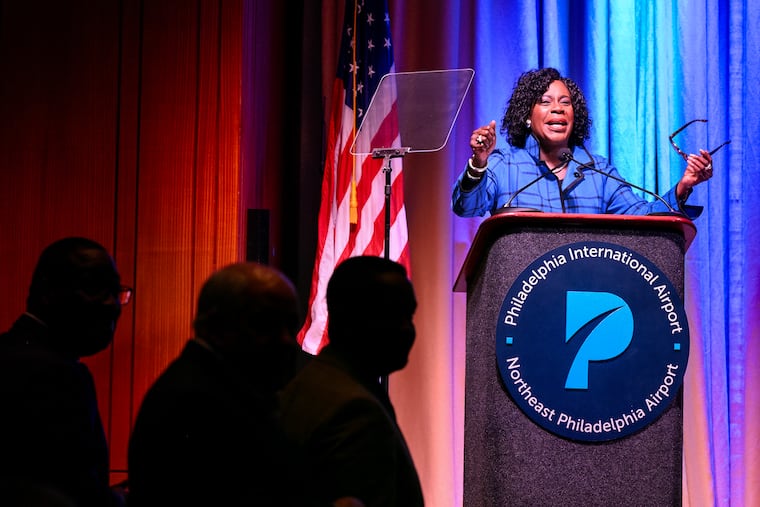
As the city of Philadelphia navigates this complex landscape, Mayor Cherelle L. Parker has expressed her commitment to the community and the need for accountability. In her recent statements, Parker emphasized her dedication to tangible outcomes rather than mere rhetoric. Advocates are calling on Mayor Parker to translate this sentiment into actionable results that benefit marginalized communities, particularly as they contend with the challenges posed by both local and national policies.
The city’s changing landscape calls for vigilance and advocacy as residents await substantive improvements that address long-standing disparities in economic opportunity.