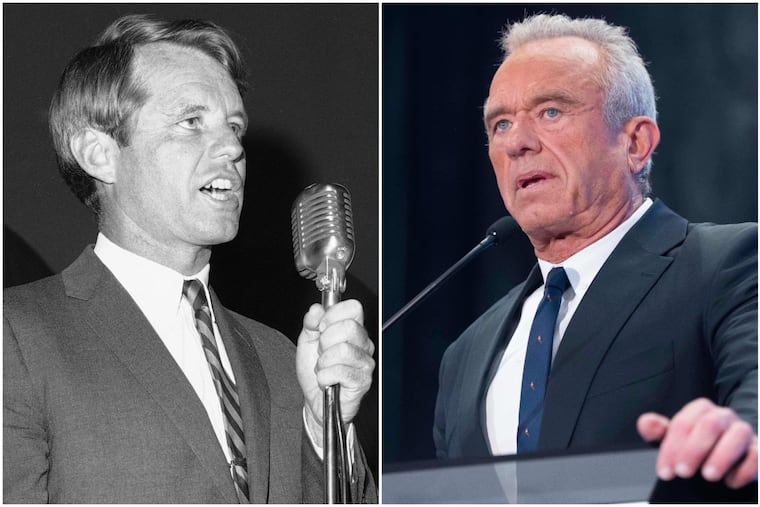
Bobby Kennedy aimed to unite the nation; RFK Jr. is now in an administration accused of fostering division.
Robert F. Kennedy Jr. has become a prominent figure in American politics, often evoking memories of his father, the late Senator Robert F. Kennedy. While Robert F. Kennedy Sr. was known for his pursuit of national unity and social justice, his son appears to navigate a markedly different political landscape, closely aligned with former President Donald Trump’s administration, which has frequently emphasized division over unity.
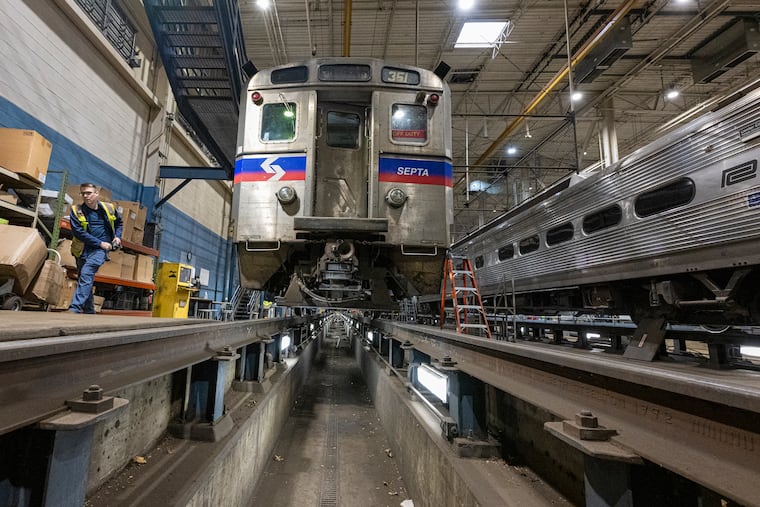
The juxtaposition between the two generations of Kennedys is striking. Older Americans may vividly recall the tumultuous events surrounding the assassination of Robert F. Kennedy Sr. in June 1968. This period was marked by a significant cultural and political upheaval, with Bobby Kennedy’s candidacy offering hope for a resolution to the Vietnam War and a shift in economic focus to uplift America’s urban communities. As his funeral train traversed cities like Newark and Baltimore, it brought forth a profound sense of loss, underscoring the promise that Bobby represented to many working-class Americans.
Unlike the grand ceremonies often associated with presidential funerals, Robert F. Kennedy Sr.’s memorial was a somber procession, stripped of fanfare yet filled with the poignant grief of a nation. The public gathering along the railways witnessed a diverse array of faces—Black and white—symbolizing the broad appeal Bobby had among various communities. His vision included uniting people from different backgrounds to support his proposals for social reform and racial justice during his brief presidential campaign.
Bobby Kennedy’s historical legacy is deeply rooted in his fight for civil rights. As Attorney General, he championed desegregation and civil liberties, demonstrating empathy not just for marginalized groups but also for white working-class citizens. His appeal was all-encompassing, emphasizing the need for a united front against social and economic inequality.
In the context of his 1968 presidential campaign, Bobby Kennedy articulated a vision for America that sought to mend divides among races, classes, and other societal groups. He envisioned a nation that could confront its issues of disparity and injustice collectively, urging an end to divisions fostered in part by the war in Vietnam.
Today, Robert F. Kennedy Jr. stands in stark contrast to this vision, operating within a political framework that often fuels division rather than healing. As he forges his path in contemporary politics, it remains to be seen how the legacy of his father will shape his role in the ongoing dialogue surrounding unity and progress in America.
Media News Source