
Bucks data center prompts demand for consumer protection against rising power grid costs.
An independent monitor has urged federal regulators to take action to protect consumers from potential financial burdens associated with a significant data center proposed for Bucks County, Pennsylvania. Joseph Bowring, who oversees market operations for the regional grid operator PJM, submitted comments to the Federal Energy Regulatory Commission (FERC) last week, expressing concerns over a recently issued transmission service agreement between Peco Energy and Amazon Data Services.
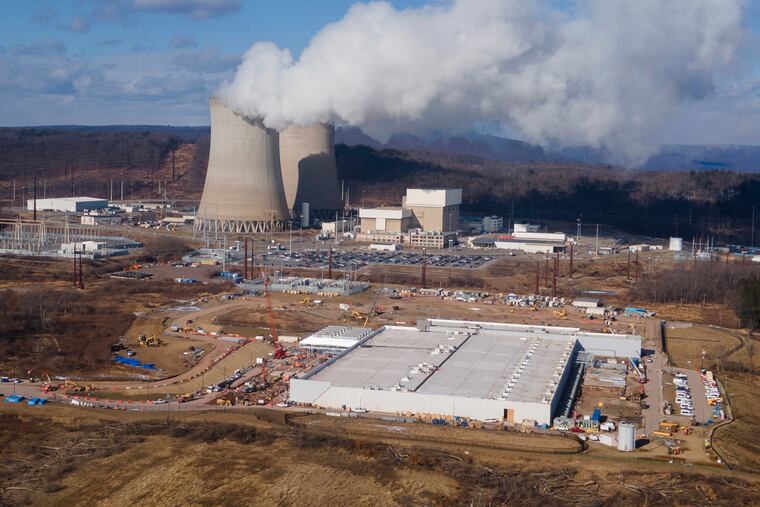
The agreement pertains to Amazon’s ambitious plan to construct a substantial “digital infrastructure campus” covering 2 million square feet at the Keystone Trade Center, a large 1,800-acre site previously owned by U.S. Steel. This data center is designed to accommodate the soaring demand for artificial intelligence computation and related technologies, a project that has garnered support from Pennsylvania Governor Josh Shapiro and the Trump administration.
Despite the potential economic benefits of this development, Bowring raised critical questions about the feasibility of the agreement. He argued that it does not adequately address whether the electrical grid has sufficient capacity to meet the new demands without imposing high costs on consumers. The agreement was intended to shield customers from the economic liabilities associated with system upgrades necessary for managing the increased load from the data center.
Peco had aimed to ensure that consumers would not face financial repercussions should Amazon’s data center not materialize. Yet, Bowring contended that this provision alone does not suffice to guarantee reliability and affordability for power customers, many of whom have already experienced steep utility bill increases in recent months.
PJM is responsible for managing the electric grid across 13 states and the District of Columbia. As the largest regional transmission organization in the country, it must maintain grid reliability while managing electric supply and capacity. This has become increasingly challenging as new data center projects proliferate in the region. PJM’s management indicated that peak load readiness is projected to increase by 32 gigawatts by the year 2030, of which approximately 30 gigawatts are anticipated to originate from data centers.
These emerging demands raise red flags for power companies, which are tasked with ensuring stability without incurring significant expenses that could ultimately be shifted to consumers through higher utility rates. Consumer advocates have voiced alarm over the financial implications of these developments. Bowring’s recent assertions reflect a growing consensus among stakeholders that data centers’ energy requirements could lead to substantial increases in electric bills—potentially as much as monthly—over the next decade.
Environmental advocacy groups like the National Resources Defense Council (NRDC) have expressed concerns about the ramifications of aggressive data center expansion on power reliability, clean energy initiatives, and public health. The NRDC estimates that Peco could incur around .1 billion in costs related to necessary capacity upgrades by the year 2033, which would essentially shift the burden onto consumers in the form of elevated electricity bills.
In light of these discussions, advocates suggest that regulations require data centers to contribute financially to the infrastructure capable of sustaining their high energy demands, emphasizing the need for equitable cost distribution. The recent developments around Amazon’s data center proposals illustrate the broader challenges posed by the rapid expansion of digital infrastructure and its impact on existing energy frameworks within the United States. As the conversation continues, the focus remains on balancing innovation with the economic realities faced by everyday consumers.
For additional insights into the evolving landscape of power demands and infrastructure investment, refer to ongoing reports from Media News Source.


