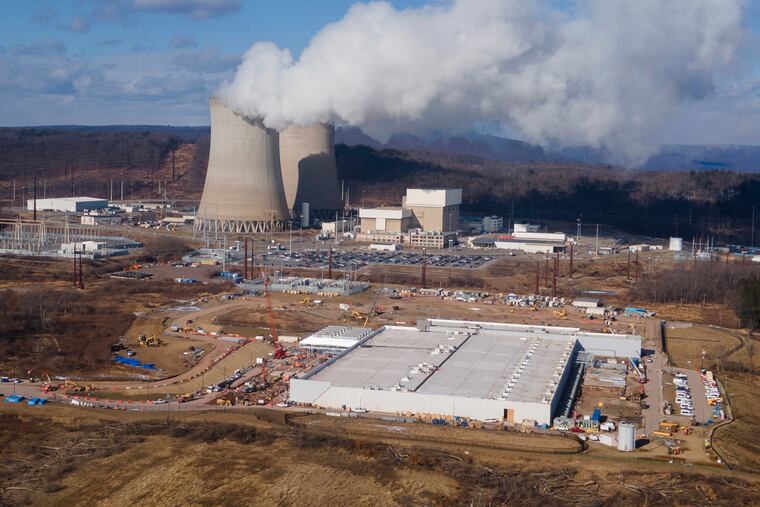
Bucks data center raises concerns over potential consumer costs related to power grid expenses.
An independent market monitor has urged federal regulators to take proactive measures to prevent consumers from being financially burdened due to potential power shortages arising from a substantial data center project planned in Bucks County, Pennsylvania. Joseph Bowring, in his recent comments submitted to the Federal Energy Regulatory Commission (FERC), raised concerns regarding a transmission service agreement between Peco Energy and Amazon Data Services. He specifically called for the rejection of this agreement which pertains to a proposed 2 million-square-foot data center within the Keystone Trade Center, a vast 1,800-acre site previously owned by U.S. Steel.
This development, touted as pivotal to meet escalating demands for artificial intelligence and data processing, has received significant backing from local and state officials, including Governor Josh Shapiro. However, Bowring, representing the interests of the regional electric grid operator, PJM, emphasized that the agreement fails to adequately address critical issues concerning capacity. Specifically, he questioned whether the existing electrical grid could reliably meet the increased load that the new data center would impose without resulting in exorbitant costs to all PJM customers.
The transmission agreement aims to mitigate risks associated with system upgrades necessary to accommodate Amazon’s operations. Notably, it includes provisions intended to protect consumers from paying for infrastructure enhancements in the event that Amazon chooses not to proceed with the center. Despite these measures, Bowring contends that the lack of clarity regarding the grid’s capacity to support such a significant operation remains unresolved, potentially jeopardizing overall reliability and affordability for consumers.
The surge in data center construction has raised pressing questions about the infrastructure’s resilience, prompting concerns from advocacy groups like the National Resources Defense Council (NRDC). The NRDC has illustrated that Peco could incur approximately .1 billion in enhancement costs by 2033, exacerbating the financial strain on consumers, with projections indicating possible increases in utility bills.
As the demand for energy grows, PJM, responsible for managing the electric grid across 13 states and the District of Columbia, is facing substantial challenges in maintaining grid stability. According to Chairman David Mills, the organization anticipates a peak load growth of 32 gigawatts by 2030, predominantly driven by data centers.
Consumer advocacy groups are urging regulatory measures to ensure that the costs associated with increasing energy capacity do not disproportionally impact residential customers. Critics argue that without intervention, the burden of financing necessary upgrades could ultimately fall on everyday consumers, mirroring the inequity felt in a dining scenario where the wealthiest diners avoid the collective bill.
As this situation unfolds, the interplay between rising energy demands from data centers and the existing grid capacity is emerging as a critical issue, with potential long-term implications for both affordability and reliability of power supply across the region.
Media News Source.