Camden schools chief approves 2025-2026 budget, resulting in nearly 300 job cuts.
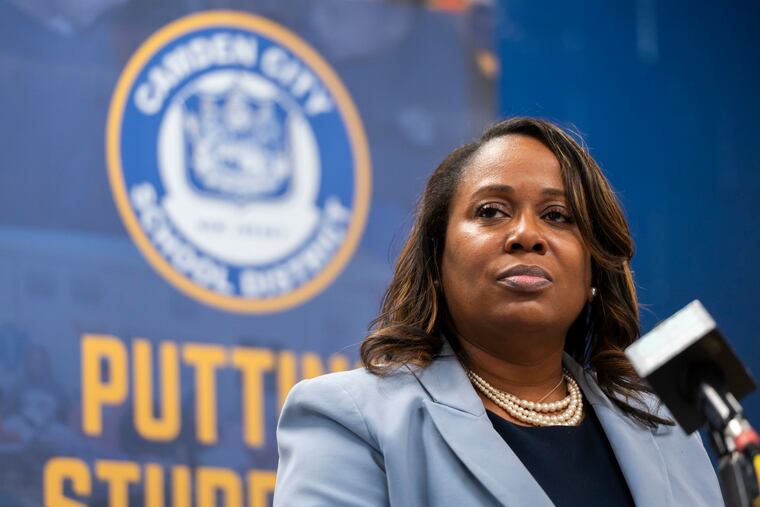
In a recent public hearing, Camden School Superintendent Katrina T. McCombs outlined significant budget cuts necessary to address a projected million deficit for the 2025-26 school year. The announcement, which has prompted widespread concern among educators and community members, is set to result in the elimination of nearly 300 positions within the district.
McCombs, under pressure from state officials, presented a 2 million budget amid an emotionally charged atmosphere. Many attendees expressed their dismay over the impending job losses, which include 117 positions being cut outright while others will be reassigned. The emotional weight of the meeting was palpable, as several educators voiced their fears about the impact of these cuts on students and the community.
The financial challenges facing Camden’s school district have been compounded by the cessation of COVID relief funds and the increasing popularity of charter and Renaissance schools, both of which have siphoned students—and consequently, funding—away from traditional public schools. Since the district came under state control in 2013, its fiscal difficulties have only intensified. Although external federal funding helped address a million deficit this fiscal year, McCombs stated that no emergency funds would be forthcoming for the next year, thus necessitating deeper budget cuts.
Among the specific measures being taken, the district plans to reduce its workforce from 1,613 to 1,329 full-time employees. This reduction will include displacing a comprehensive support staff, including security personnel, attendance officers, and custodians. Additionally, restructuring plans involve changing the management structure of Camden High School and converting Morgan Village Middle School into an alternative institution.
Community leaders and activists have called for a forensic audit of the district’s finances and questioned the efficacy of the school advisory board, which stated it was unaware of the district’s financial condition until very recently. N’Namdee Nelson, president of the advisory board, acknowledged the alarming state of affairs but indicated that the board’s powers are limited.
As part of efforts to navigate these challenges, McCombs has proposed a slight increase in property taxes; the 2025-26 budget includes a tax levy that would add approximately in taxes for the average home assessed at ,000. However, skepticism persists among community members about whether this will be sufficient to stabilize the district’s finances.
Furthermore, the surge in enrollment at charter and Renaissance schools—both of which have strained the district’s budget—is a pressing concern. Payments to these alternative schools have escalated dramatically, placing additional financial burdens on the district.
As McCombs prepares to leave her post at the end of June, she acknowledged the criticisms received during her tenure and reiterated her commitment to transparency and community engagement. The future of Camden’s educational environment hangs in the balance as stakeholders grapple with the ramifications of these budgetary decisions.
The unfolding situation highlights the ongoing challenges faced by urban school districts across the nation, where fiscal constraints often conflict with the imperative to provide quality education. Media News Source remains committed to following this story as it develops.