Charges Filed Against Indian Crime Boss in Assassination That Impacted Canada-India Relations
Authorities have recently unveiled charges against the alleged leader of an Indian criminal organization linked to the assassination of a well-known Sikh leader in Canada. This high-profile murder, which occurred in 2023, heightened tensions between the Canadian and Indian governments during that period.
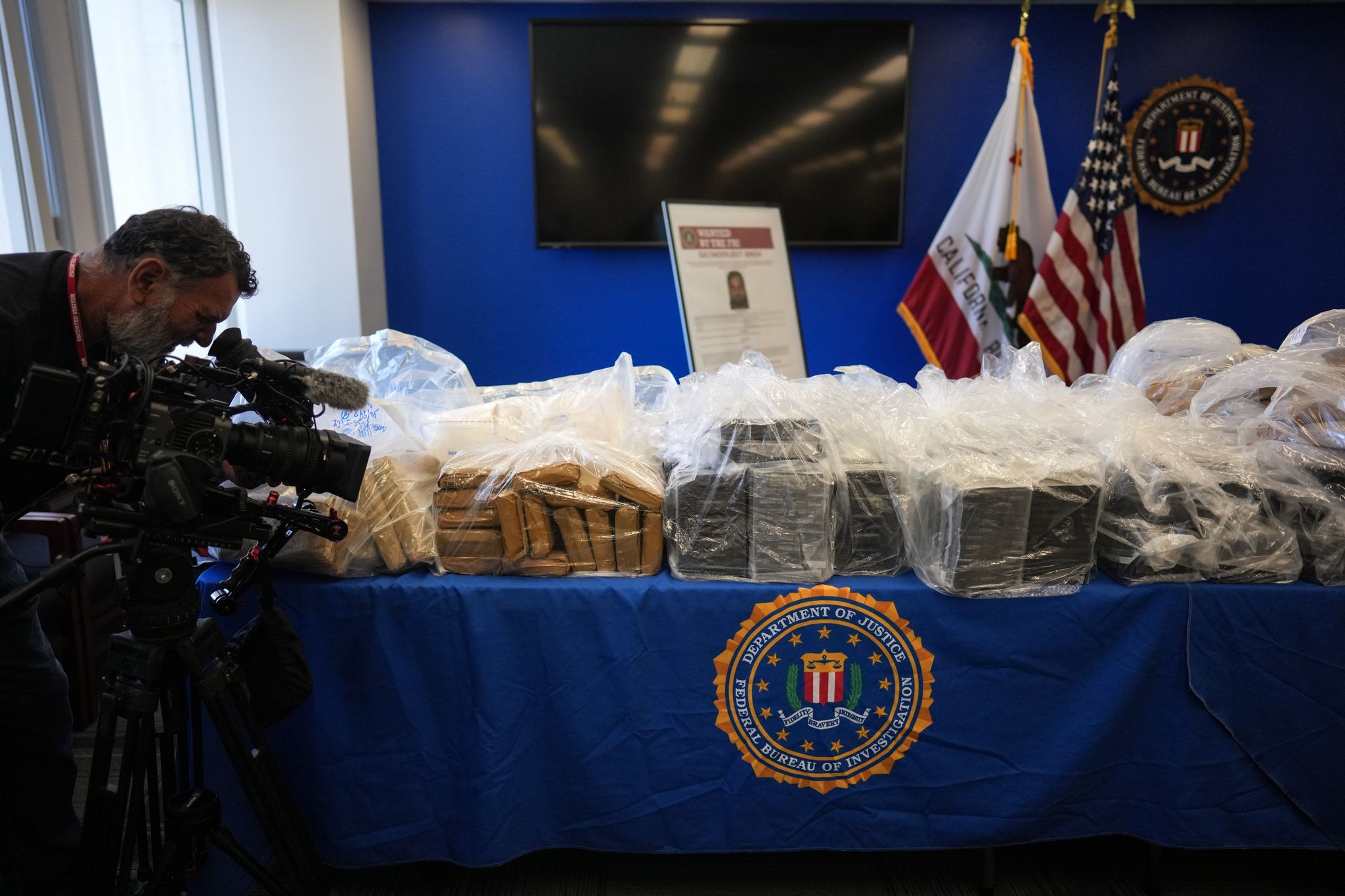
The indictments are part of an extensive law enforcement initiative that has involved collaboration among agencies in the United States, Canada, and Europe, resulting in the apprehension of 37 individuals. These individuals are said to belong to three Indian international crime syndicates implicated in a series of serious offenses, including kidnappings, racketeering, extortion, firearms trafficking, drug dealing, and murder. U.S. Attorney Bill Essayli emphasized the scale of this operation during a recent press conference, where he was joined by personnel from the Los Angeles Police Department, the FBI, and the Royal Canadian Mounted Police. The search for seven fugitives currently continues in the U.S., alongside two in India and one in Europe.
The FBI has described these criminal groups as contributing to violence and instability among East Indian communities throughout California and beyond. Lawrence Bishnoi, 33, along with his associate Satinderjeet Singh, are accused of orchestrating the killing of Hardeep Singh Nijjar, a prominent Sikh independence activist. Nijjar was shot outside of a temple where he served as president and was actively promoting a referendum for the establishment of an independent Sikh homeland known as Khalistan. His assassination triggered accusations from Canadian Prime Minister Justin Trudeau, who asserted that there were credible allegations linking the Indian government to the crime. Currently, Bishnoi remains in custody while Singh has yet to be apprehended.
Nijjar, who was 45 at the time of his death, was a Canadian citizen and was wanted by Indian authorities for his involvement in separatist activities. India had previously placed a bounty on his head, reflecting the contentious nature of Sikh diaspora activism, which has historically strained Canadian-Indian relations. Canada is home to the largest Sikh population outside India, and in the wake of Nijjar’s assassination, both nations expelled diplomats amid rising diplomatic tensions.
The investigation, which spanned two years, also implicated additional criminal organizations with global links, including members residing in countries such as the United States, New Zealand, Australia, Portugal, and the United Kingdom. These groups have been accused of engaging in drug trafficking and theft from rival operations in California, further compounding the complex landscape of organized crime involving Indian syndicates.
Officials revealed that some suspects maintained corrupt ties with local authorities in India to eliminate rivals, and at least one defendant was allegedly orchestrating criminal activities while being detained by U.S. Immigration and Customs Enforcement.
While an attorney for Bishnoi has not been publicly identified, this large-scale operation is being presented as a testament to the effectiveness of international law enforcement collaboration. Authorities have expressed their commitment to dismantling these criminal networks wherever they exist, underscoring the need for ongoing cooperation among nations including the U.S., Canada, Europe, and Asia. The recent developments highlight the intricate ties between transnational crime and geopolitical tensions, drawing increased attention to the strategies employed by law enforcement to address these challenges.
Media News Source