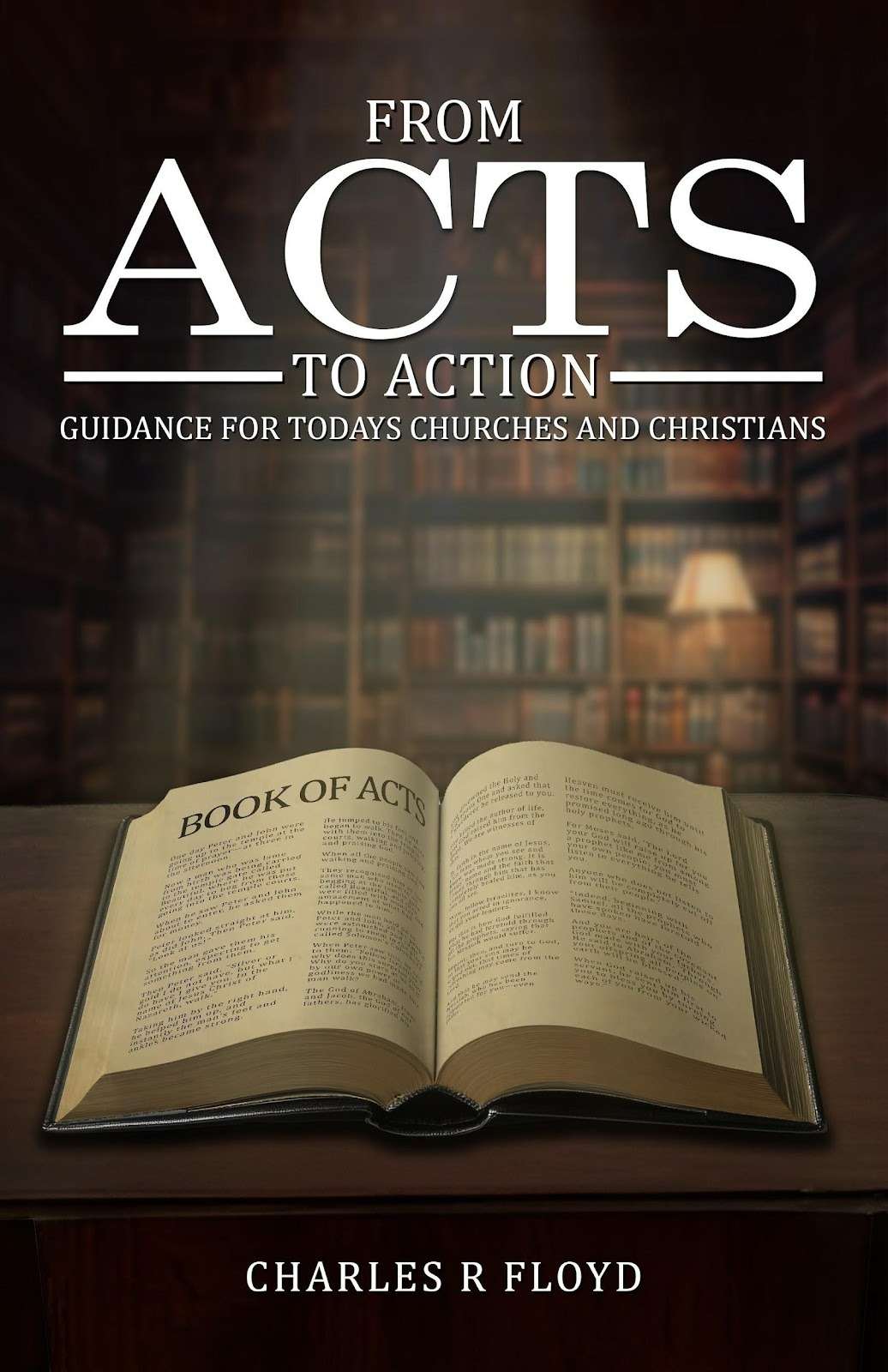
Charles Floyd connects early church teachings to contemporary Christianity through a new bridge venture.
In a contemporary landscape where faith communities frequently grapple with profound challenges, a distinctive voice has emerged, one shaped not by traditional ecclesiastical roles but through extensive experiences in construction, law, and military service. Charles R. Floyd, a seasoned project manager, veteran, and juris doctor, has transitioned from the building of physical structures to the construction of spiritual frameworks in his latest publication, “From Acts to Action: Guidance for Today’s Churches and Christians.” This book serves as a pragmatic guide, asserting that the resolutions to the complexities facing today’s churches are embedded within the foundational teachings of the first-century church as detailed in the Book of Acts.
Floyd’s work is structured around a compelling central thesis that delineates the growth and vitality of the early church as catalyzed by two primary forces: internal and external. The text meticulously examines 14 pivotal passages from Acts, unpacking moments marked by divine intervention, persecution, and personal transformation, thus offering a comprehensive analysis.
The first section, “Internal Forces,” emphasizes the organic development within the early Christian community. Floyd references the pivotal event in Acts 2, where the steadfast devotion of early believers to teaching, fellowship, and prayer fostered a compelling community marked by love and mutual support. He considers the transformative role of figures like Paul, a former adversary of the church, suggesting that divine inclusion often challenges existing norms and expands the reach of faith.
Conversely, the “External Forces” section explores how pressures from society prompted the church’s expansion. Floyd analyzes specific instances of persecution, illustrating how opposition spurred the dispersion of believers and thus facilitated the spread of the Gospel beyond the confines of Jerusalem. Through narratives, such as that of King Herod Agrippa’s downfall, the author invites contemporary churches to view moments of cultural adversity as integral to the Christian experience, nurturing resilience in the faith community.
In addition to biblical exposition, Floyd includes sections dedicated to the practical application of teachings for both the church and the individual. For church leaders, he addresses crucial matters such as staff vetting and financial stewardship while cautioning against the potential pitfalls of programs overshadowing core missions. For individual believers, his message shifts to a pastoral tone, encouraging reliance on the Holy Spirit for daily guidance.
Central to Floyd’s argument is the indispensable role of the Holy Spirit as guide and comforter. Drawing from his professional journey, he shares experiences where solutions emerged unexpectedly, attributing these moments to the Spirit’s influence. He contends that the modern church’s urgent need is not for novel strategies but for a renewed dependence on this enduring source of strength.
“From Acts to Action” ultimately serves as a clarion call for reflective engagement within church communities. Floyd does not present a simplistic solution or a trendy model for growth; rather, he advocates for a return to the enduring principles that spurred the early church’s global movement. This work is intended for weary pastors, church members questioning their roles, and individuals seeking to comprehend how their narratives intersect with the ongoing story initiated in the Book of Acts.
Charles R. Floyd’s extensive background—spanning over 25 years in managing church construction projects, coupled with degrees in biblical studies and law—affords him a unique perspective. His insights stem from an intricate understanding of church dynamics and challenges, making “From Acts to Action” a critical resource. By synthesizing his diverse experiences, Floyd offers not only a thought-provoking narrative but also a framework through which contemporary faith communities can ponder their roles in an ever-evolving spiritual landscape. As he concludes, the story of Acts does not culminate in a period; rather, it continues, inviting believers to actively participate in writing the next chapters with faith, wisdom, and courage.