
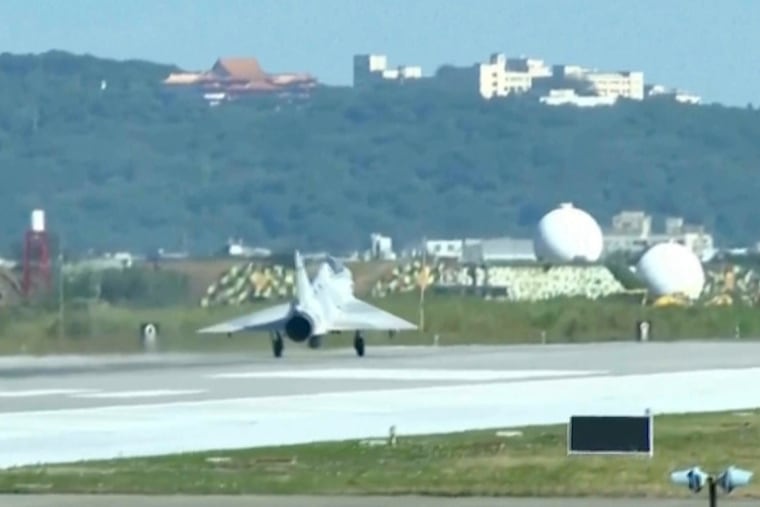
China conducts military drills near Taiwan in response to increasing tensions between the U.S. and Japan, signaling a warning to external forces.
HONG KONG — In a significant demonstration of military might, China conducted joint live-fire drills involving air, naval, and missile units around Taiwan on Monday. This exercise has been characterized by Beijing as a “stern warning” against perceived separatist movements and external interference, particularly in light of increased support from the United States and Japan for the self-governing island. In response, Taiwan has placed its military forces on high alert, condemning the Chinese government as “the biggest destroyer of peace.”
Taiwan’s civil aviation authority has reported that over 100,000 international travelers may face disruptions due to flight cancellations and diversions resulting from the military exercises. The drills are taking place amidst heightened tensions, particularly following Beijing’s outrage over what is reportedly the largest arms sale from the U.S. to Taiwan and provocative statements from Japanese officials regarding the defense of Taiwan.
Although China did not directly mention the United States or Japan in its announcements about the drills, their foreign ministry characterized Taiwan’s ruling party as actively seeking independence through foreign support. Taiwan’s Defense Ministry has stated that rapid response exercises were initiated, while reiterating its view of the Chinese Communist Party as an aggressor.
The ongoing military posturing has included regular incursions by Chinese warplanes and naval vessels into Taiwan’s vicinity, with such actions becoming increasingly frequent in recent years. On Monday, Senior Colonel Shi Yi, spokesperson for the People’s Liberation Army’s Eastern Theater Command, announced that drills would be executed in various regions around the Taiwan Strait, focusing on enhancing combat readiness and conducting operations aimed at asserting naval superiority.
The exercises raise significant concern for regional stability, as military officials in Taiwan reported the presence of 89 aircraft and drones operating near the strait. Additionally, 14 Chinese naval vessels were detected in the region, with military maneuvers projected to continue in the following days. Taiwan’s authorities have indicated that the exercises not only present military pressure but could complicate the security landscape for the international community and neighboring nations.
Military drills in the Taiwan Strait are expected to intensify with the Chinese command designating seven temporary hazardous zones for rocket-firing exercises, significantly affecting air traffic in the area. The Taiwanese aviation authority noted that the drills would impact over 850 international flights scheduled during the exercise period, leading to the cancellation of numerous domestic flights.
In recent developments, the Chinese command has issued thematic posters promoting the drills, accompanied by assertive messaging. As tensions continue to rise between China and Taiwan, military activity is closely monitored by both local authorities and the international community, given the critical implications for regional security and international diplomatic relations.


