China halts supplies to Philly Shipyard to retaliate against Hanwha’s partnership with the U.S. amid ongoing trade tensions.
China has officially imposed restrictions on factories that supply essential components to various global industries, effectively barring them from conducting business with Hanwha Philly Shipyard and four other subsidiaries affiliated with the South Korean Hanwha industrial group. The Ministry of Commerce in China has accused Hanwha of facilitating and supporting U.S. trade investigations that led to the introduction of new levies against vessels produced in China. These penalties, which include a per ton port fee on China-built ships, are claimed to significantly disadvantage Chinese enterprises.
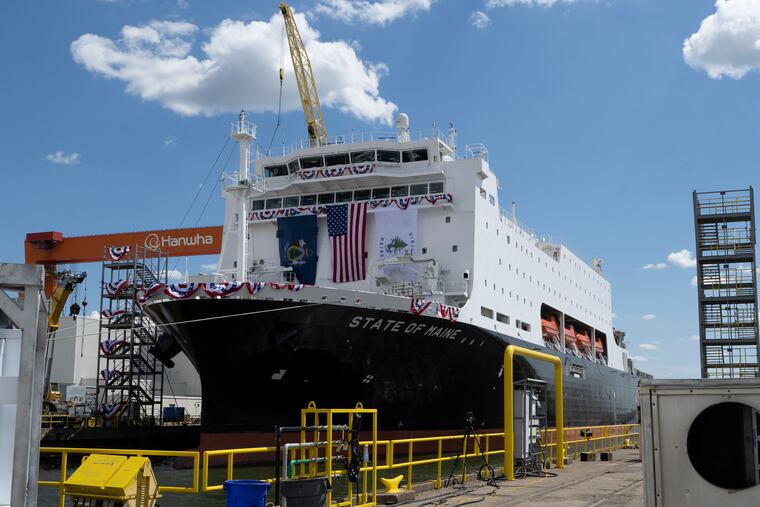
The timing of China’s sanctions is notable, coinciding with an upcoming trade conference in Korea, in which U.S. President Donald Trump and Chinese leader Xi Jinping will be participating. This development poses a significant challenge for South Korea and its shipbuilding sector, placing them in a precarious position between Chinese material suppliers and U.S. shipping clients. The Hanwha group is currently looking to secure contracts with the U.S. Navy and is undergoing a rapid expansion of its facilities in Philadelphia.
Following the announcement, shares of Hanwha Ocean, the conglomerate’s shipping and shipbuilding division, experienced a decline of 6%. Company officials are currently assessing the potential ramifications of losing access to their Chinese suppliers.
China’s export agency condemned recent U.S. sanctions as violations of international law and fundamental trade norms. In retaliation, China has enacted its own measures, imposing port fees on U.S.-flagged vessels, despite the fact that relatively few American ships dock at Chinese ports.
The Trump administration maintains that the instituted fees and tariffs are necessary to safeguard U.S. strategic and economic interests while penalizing China’s alleged targeting of American maritime industries. China ranks as the world’s leading shipbuilder, followed closely by South Korea. The United States has allied with Hanwha and other South Korean firms to bolster domestic shipbuilding and expedite the expansion of its naval fleet.
In a significant show of commitment, Korean President Lee Jae Myung recently pledged a billion investment in the Philadelphia shipyard, which Hanwha acquired last year for 0 million. This investment is part of a broader initiative to enhance shipbuilding capabilities in the U.S., though discussions continue regarding whether South Korean entities will invest directly in U.S. facilities or offer financial loans.
Hanwha, known for operating larger shipyards in Korea, aims to enhance productivity at the Philadelphia location, increasing its output from one civilian ship every eight months to 20 vessels—comprising both commercial and naval ships—annually. Plans include the addition of dry docks, cranes, and robotic welding technology, with workforce expectations projecting a doubling of personnel to 4,000 in the coming years. This expansion is further intended to take advantage of surrounding properties, including those related to the former Philadelphia Naval Base.
As geopolitical tensions between the U.S. and China continue to escalate, the ramifications on global shipping and trade remain to be fully understood. This situation highlights the intricate interdependencies in international manufacturing and supply chains, alongside the increasing influence of governmental policies on commercial enterprises.
Media News Source