China imposes sanctions on 20 U.S. defense firms and 10 executives due to significant arms sales to Taiwan.
Beijing has enacted significant sanctions against a cohort of twenty U.S. defense-related companies and ten of their executives, following the U.S. government’s recent announcement of a substantial arms sale to Taiwan. This development, which is poised to heighten tensions between the two global powers, marks a decisive move by China aimed at countering what it perceives to be provocative actions by Washington.
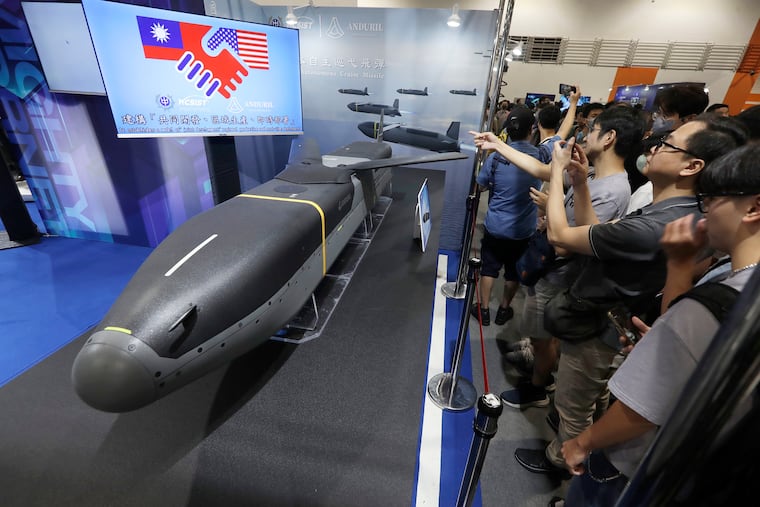
According to a statement from the Chinese Foreign Ministry, the newly imposed sanctions will result in the freezing of assets belonging to these firms within China, as well as a prohibition against any individuals or organizations conducting business with them. Among the companies affected by these sanctions are major defense contractors such as Northrop Grumman Systems Corporation, L3Harris Maritime Services, and Boeing. In addition, Palmer Luckey, the founder of Anduril Industries, has also been targeted, with restrictions barring him from entering China.
The U.S. arms package, which is valued at over billion, has generated significant backlash from Beijing. China’s government insists that Taiwan is a part of its territory and underscores its position that the self-ruled island must ultimately come under China’s governance. If the arms package is approved by the U.S. Congress, it would constitute the largest weapons deal to Taiwan in U.S. history, a move that analysts agree could further destabilize the already tenuous U.S.-China relationship.
The Chinese Foreign Ministry has reiterated the importance of the Taiwan issue, declaring it to be a fundamental facet of China’s core interests. They have made it explicitly clear that any entities or individuals involved in arms sales to Taiwan will face repercussions for their actions. Additionally, the ministry has called upon the United States to cease its “dangerous moves” in arming Taiwan.
The situation surrounding Taiwan remains a critical flashpoint in U.S.-China relations, with rising concerns that the dispute could escalate into a military conflict between the two nations. Analysts note that China’s military presence around Taiwan has intensified in recent years, with an increased frequency of military drills involving warships and fighter jets in proximity to the island.
Under U.S. federal law, the U.S. is obligated to provide support to Taiwan for its self-defense, a point of contention that continues to sour relations with Beijing. The backdrop of strained ties includes broader issues such as trade, technology disputes, and human rights concerns, all contributing to the complex and increasingly fraught relationship between the United States and China. Media News Source.