Citizenship Day: Significance of the Day for Immigrants in America Explained
On September 17, 1776, the signing of the Constitution in Philadelphia marked a pivotal moment in American history, establishing the city’s reputation as the birthplace of American democracy. This date is commemorated as Constitution Day, but it is also recognized as Citizenship Day. This year, its observance coincides with ongoing legal discussions surrounding birthright citizenship, thereby raising profound questions regarding belonging and identity in the United States.
As images of shackled immigrants circulate in current media, they evoke the sentiments of Frederick Douglass, who, in 1852, posed a powerful question at an Independence Day celebration: what does the celebration of freedom signify for those who are not free? As the nation approaches the 250th anniversary of its independence, it is timely to ask: What does Citizenship Day represent for immigrants in America today? For many, it serves as a stark reminder that their status in this nation has historically been, and remains, precarious.
Citizenship Day, first declared in 1952 by President Harry S. Truman, is intended for every American—whether native-born or naturalized—to reflect on their rights and responsibilities under the Constitution. However, this raises important concerns: what occurs when certain groups are expected to uphold responsibilities while being denied corresponding rights?
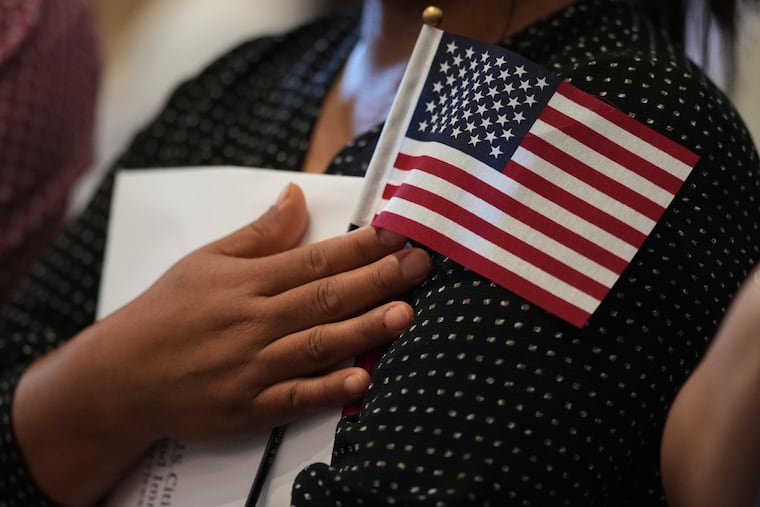
During the naturalization process, new citizens pledge the Oath of Allegiance, committing to defend the Constitution and the laws of the United States. Yet, questions arise regarding the obligations of citizens when the constitutionality of actions taken by their government is in question. Civil engagement through protests, petitions, and voting constitutes only part of the equation. Equally vital is the work of education—both in understanding American history and honoring one another’s ancestral narratives.
A critical examination of shared histories can promote a more inclusive national identity. For instance, the Statue of Liberty is widely deemed a symbol of hope for immigrants. Its famous inscription, penned by poet Emma Lazarus, reflects a welcoming attitude, while the statue itself commemorated the abolition of slavery and America’s centennial in 1876, wrought with deeper historical significance than often recognized.
The acknowledgment that history is frequently shaped by those in power demands a multifaceted approach to citizenship. Engaging with diverse sources of information is crucial for fostering active participation in democracy. Americans are called to explore and discuss their own histories, particularly the repercussions of U.S. involvement in other nations, such as those in Central America, which has influenced the current landscape of immigration.
For parents and caregivers, cultivating conversations around these themes provides context and depth to the educational narratives presented in schools. By extending these dialogues beyond family boundaries, individuals can contribute to a richer understanding of citizenship and identity within their communities.
Ultimately, the essence of citizenship begins at home. It manifests through both small actions and substantial discussions. Regardless of one’s sphere of influence, participating in the democratic process is an essential, ongoing commitment that shapes the future of the nation.
As the dialogue surrounding citizenship evolves, so does the imperative for active engagement, learning, and reflection in order to create a more accurate and comprehensive understanding of what it means to be American in today’s complex landscape.
Media News Source