
City Council proposes bill to prohibit housing development in the area of the former Hahnemann University Hospital.
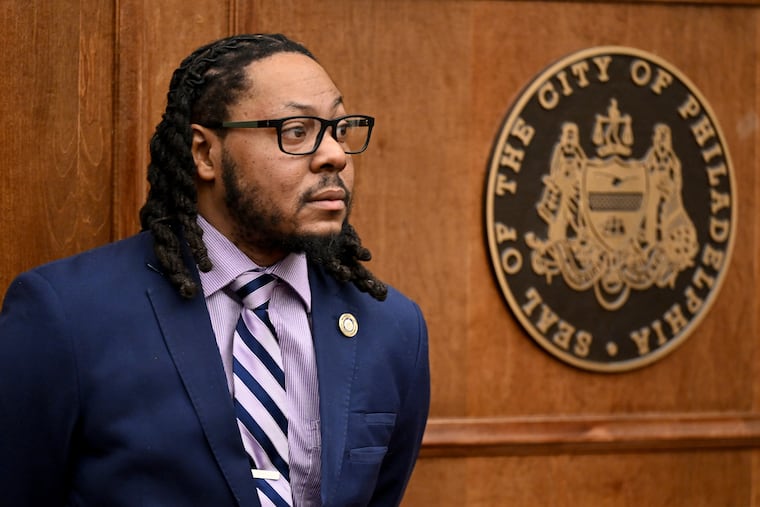
In a significant move poised to reshape local development dynamics, Philadelphia Councilmember Jeffery “Jay” Young has put forth legislation aimed at banning residential construction in the vicinity of the former Hahnemann University Hospital. Introduced during the last meeting of the City Council in 2025, this bill seeks to establish a new zoning overlay that would encompass the area bordered by Race Street to the north, North 16th Street to the east, Callowhill Street to the south, and North Broad Street to the west.
This proposed overlay directly affects plans by developer Dwight City Group to convert two existing patient towers from the now-closed Hahnemann University Hospital into a residential complex comprising 288 apartments. Alongside this, the legislation would impact adjacent properties owned by entities such as Drexel University and Iron Stone Real Estate Partners. Currently, the appropriation of building or zoning permits for this ambitious undertaking has not been granted. If enacted, Councilmember Young’s legislation would complicate the project’s progression, requiring the developer to seek exceptions from the Zoning Board of Adjustment to proceed.
The rationale behind Young’s legislative initiative is to promote long-term job creation in the area. He has articulated a vision for maintaining the commercial integrity of the district, emphasizing the importance of ensuring that the region continues to provide job opportunities for the local populace. Despite the potential implications of the bill, which might deter residential development, Young has framed it as a means to foster economic stability within the community.
Dwight City Group, known for revitalizing underutilized buildings into moderately priced living spaces, has refrained from commenting on the new legislation. Their CEO, Judah Angster, has previously indicated that the envisioned apartments would be aimed at the middle market, designed as one- and two-bedroom units to cater to affordability while ensuring quality.
The impact of Young’s proposal highlights ongoing tensions within the City Council regarding zoning practices, with critics labeling the use of such overlays as detrimental to housing supply. Local developers and housing advocates have expressed concerns that restricting residential construction may hinder necessary housing developments in a city already facing supply shortages. Mohamed “Mo” Rushdy, managing partner of the Riverwards Group and chair of the Philadelphia Housing Development Corporation, remarked on the potential negative ramifications of overlays that specifically limit housing options.
Looking forward, the City Council is scheduled to reconvene on January 22, with the possibility that Young’s bill could see action as early as February. If passed, the legislation would underscore the ongoing debate over land use and development strategies in Philadelphia, balancing the complex interplay between economic growth and housing needs in a rapidly evolving urban landscape. As Young continues to advocate for his bill, the implications for housing and commercial opportunities in the area remain at the forefront of community discussions. The broader context surrounding tax abatement initiatives geared towards the redevelopment of underused properties further complicates the narrative, as Young stresses the importance of ensuring that local populations benefit from economic opportunities tied to their neighborhoods.


