
In the evolving landscape of America’s competitiveness in emerging technologies, industry experts underscore that strategic workforce development is as crucial as scientific innovation. Rachel Lipson, a policy expert from Harvard, articulates this perspective in her latest work, “The New American Frontier: Job Training for the Next Technological Age,” published by Harvard Education Press.
Lipson’s book explores how community colleges are positioned to be pivotal in harnessing regional investments in burgeoning fields such as semiconductors, battery technology, quantum computing, biotechnology, advanced nuclear energy, and data centers. Through extensive research and over 120 interviews with stakeholders—including employers, educators, and policymakers—she examines various regions that are successfully constructing talent pipelines. These initiatives not only aim to bolster the local workforce but also seek to open pathways to well-remunerated employment opportunities.
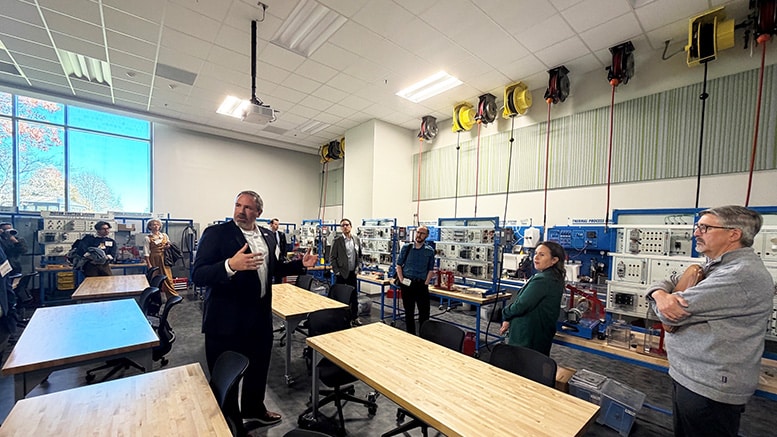
Rather than concentrating on established tech hubs, Lipson highlights communities that are developing novel workforce strategies aligned with emerging industries. For instance, at Austin Community College, collaborations with Tesla have resulted in paid earn-and-learn opportunities in advanced manufacturing. Similarly, Northern Virginia Community College has partnered with major data-center employers, while educational institutions in Arizona are addressing a significant upsurge in semiconductor manufacturing jobs. The book further explores workforce efforts in Michigan’s battery manufacturing, Colorado’s quantum technologies, Idaho’s advanced nuclear energy, and Massachusetts’ biotechnology sectors.
Throughout her analysis, Lipson emphasizes that effective workforce initiatives often start with a clear understanding of employer demand. She notes that her motivation for writing this book stemmed from an observed lack of tangible resources available to educators and workforce leaders navigating the rapid pace of technological change.
As community colleges remain a cornerstone of American education—thanks to their affordability, accessibility, and adaptability—they are uniquely equipped to connect students and working adults with jobs created by emerging technologies. Lipson posits that these institutions can swiftly respond to shifting workforce needs, often providing applied learning experiences that traditional academic programs may not offer. By building on core strengths in disciplines such as engineering technology, these colleges can develop specialized training that aligns with the requirements of evolving industries.
Despite the critical role community colleges play, significant challenges impede their capacity to expand workforce programs. The demands for advanced manufacturing and technical training necessitate expensive facilities, specialized equipment, and well-paid instructors, leading many programs to operate at a financial loss despite strong student interest.
Lipson advocates for policymakers to frame workforce development as a key component of economic competitiveness rather than merely a social service. By improving the alignment between public funding, employer requirements, and educational institutions, successful initiatives can be scaled, addressing talent shortages in areas deemed strategically significant.
Her study of Austin Community College exemplifies how educational institutions can swiftly adapt to workforce demands with the right policy backing and industry partnerships. As new technologies reshape various sectors, Lipson maintains that community colleges will be instrumental in enabling workers to seize emerging opportunities. Ultimately, these institutions will play a decisive role in determining whether the potential advantages of current technological advancements are realized fully.
Media News Source