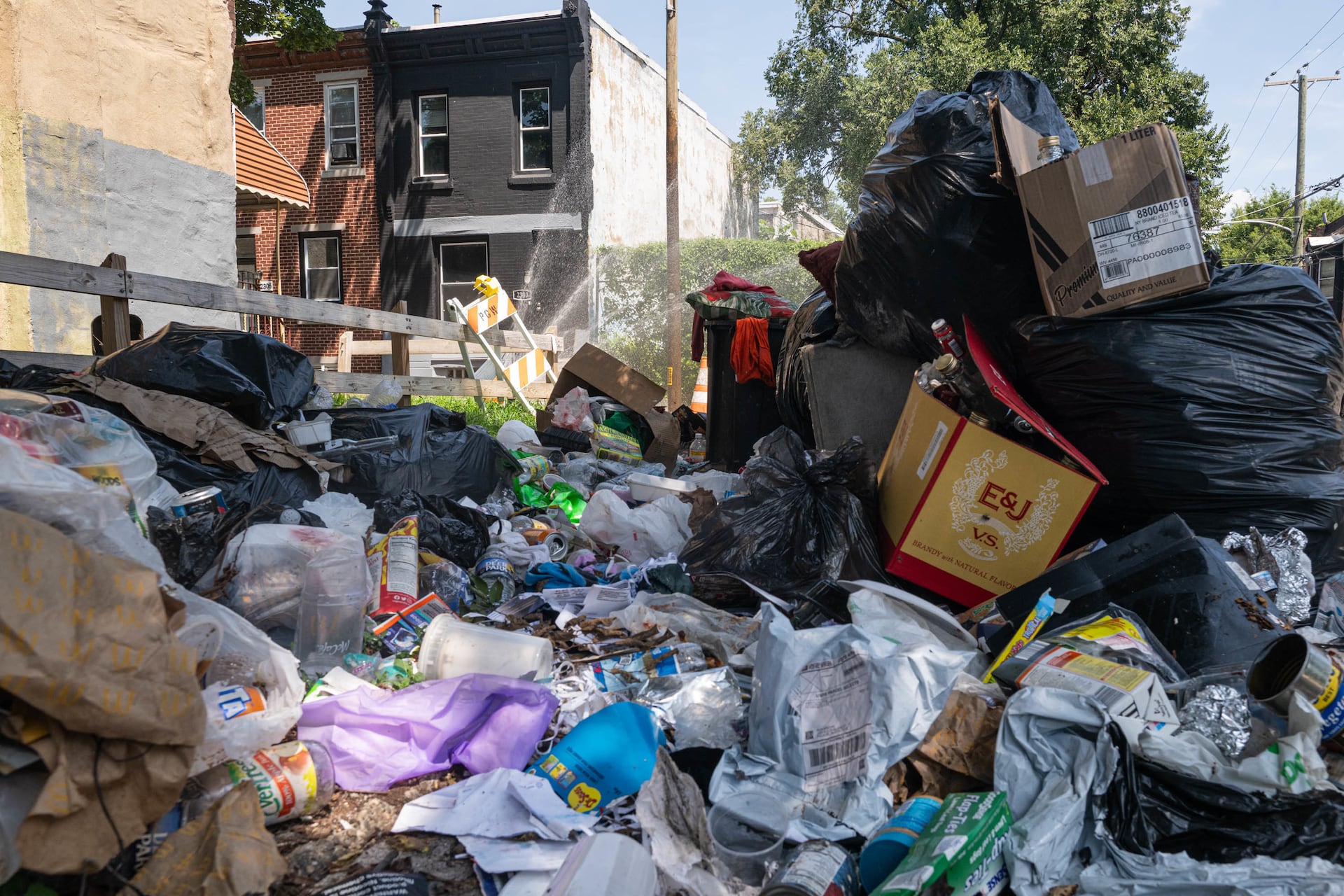
DC 33 strike features trash accumulation, protests, and public speeches.
Early Wednesday morning, after an extensive eight-day and four-hour strike, a significant labor dispute involving city workers in Philadelphia came to a close. This marked the first major strike by municipal employees since 1986. The resolution of this strike means that approximately 9,000 members of the largest municipal union, which includes 911 dispatchers, library personnel, and sanitation workers, are set to return to their duties immediately.
The breakthrough in negotiations occurred around 4 a.m., when Philadelphia Mayor Cherelle L. Parker and Greg Boulware, the president of the American Federation of State, County and Municipal Employees District Council 33, reached an agreement on a new contract. Parker described the settlement as positive news for both union members and Philadelphia’s residents and businesses, signaling a return to normalcy after days of disruption.
Despite the conclusion of the strike, Boulware expressed a sense of dissatisfaction, indicating that although the strike had ended, there were lingering frustrations among union members. The strike was initiated on July 1, coinciding with the expiration of the union’s previous contract. This led to substantial service reductions in city operations, including the closure of public pools, limited access to recreational centers, and the shutdown of libraries. The strike’s impact was particularly pronounced in sanitation services, recalling the infamous trash strike of 1986. Large mounds of waste, referred to by locals as “Parker Piles,” accumulated throughout the city, overwhelming temporary drop-off sites established by officials.
As the strike progressed, city officials employed nonunion workers and sanitation trainees to address the escalating waste crisis. Reports indicated that Philadelphia was grappling with an unprecedented amount of trash, prompting urgent interventions from city authorities. Notably, the administration also sought legal remedies, successfully obtaining court orders mandating that striking employees in essential services, such as 911 dispatchers and water department staff, return to work.
The tensions surrounding the strike peaked just before the Fourth of July celebrations, with Parker delivering an impassioned speech to union supporters, advocating for the importance of municipal workers. Throughout the protracted negotiations, both parties remained largely entrenched in their positions, particularly over wage disputes. Union members, who typically earn an average salary of ,000, are among the lowest-paid municipal workers in Philadelphia.
Ultimately, the newly ratified contract includes provisions for a 3% annual pay raise, which aligns closely with Parker’s original proposal but falls short of the 5% increase initially sought by the union. In addition, the agreement provides for ,500 bonuses and the establishment of a fifth tier in the union’s pay scale.
The conclusion of this strike highlights the continuing challenges faced by both city officials and labor unions in negotiating terms that address the needs and concerns of municipal workers, while simultaneously maintaining essential public services.