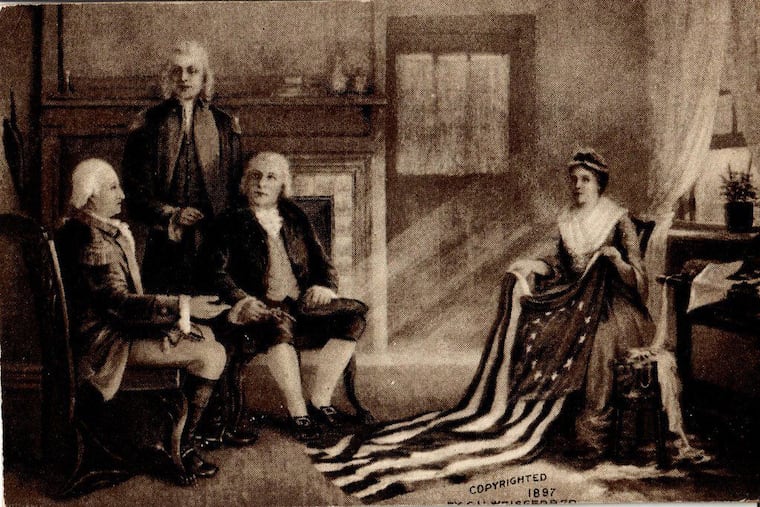
Debate continues among historians about Betsy Ross’s role in designing the first American flag, yet her contributions to early feminism are widely acknowledged.
In the historical narrative of America, few figures stand out as prominently as Betsy Ross, chiefly recognized for her association with the creation of the first American flag. In the backdrop of the Revolutionary War, a tale unfolds that features Ross, an accomplished upholsterer, and General George Washington, who sought her assistance in crafting a symbol that would unify the Continental troops.
During a visit in late winter of 1776, Washington approached Ross with a design proposal for a new flag featuring 13 stripes and 13 six-pointed stars. Legend has it that Ross demonstrated her ingenuity by altering the star design, transforming six-pointed stars into five-pointed ones. This episode is often romanticized, but it underscores the role of creative ingenuity during a pivotal moment in American history.
The Continental Congress officially approved the design of this flag on June 14, 1777, which composed of 13 alternating red and white stripes, along with 13 stars on a blue field. To commemorate this significant event, the Betsy Ross House in Philadelphia is set to feature celebrations as part of the Philadelphia Historic District’s ongoing “52 Weeks of Firsts.” This initiative, highlighting events that occurred in Philadelphia before anywhere else in America, aims to draw attention to the impactful stories tied to the American narrative.
Celebrating the first American flag at the Betsy Ross House will include the annual Flag Fest, an event that lasts ten days and features flag-raising ceremonies, storytelling, and various arts and crafts activities. Historian and audience engagement manager at the Betsy Ross House, Desta Pulley, underscores that while Ross may have been one of the colonies’ esteemed flag makers, the historical debate continues surrounding her direct involvement in the creation of the American flag. A recently discovered payment receipt indicates that Washington had commissioned work from Ross, thus revealing their acquaintance and her capabilities.
Ross’s journey did not come without personal hardship. Widowed at the age of 24, she persevered through the turbulent times of conflict and loss, maintaining her business while providing for her family. After the loss of her second husband, she remarried in 1783, yet she continued to run her business successfully, eventually passing it down to her descendants.
The evolving narrative of the American flag reflects broader shifts in meaning and symbolism throughout history. Today, it often symbolizes nationalism, sometimes sparking discussions about inclusivity and representation. The Betsy Ross House seeks to contextualize Ross’s life within the tumultuous history of America, framing her story not solely around the flag, but as one of resilience and agency.
This week’s Firstival at the Betsy Ross House, scheduled for Saturday, June 6, from 11 a.m. to 1 p.m., highlights her enduring legacy and the artistic spirit of early American craftswomen. The event is a reminder that history is often more complex than simplified tales suggest; Ross’s life exemplifies the challenges and triumphs faced by women in shaping the nation. Visitors and locals alike are invited to join in the celebration of this iconic figure and the symbols of American identity that emerged from her era.
Media News Source