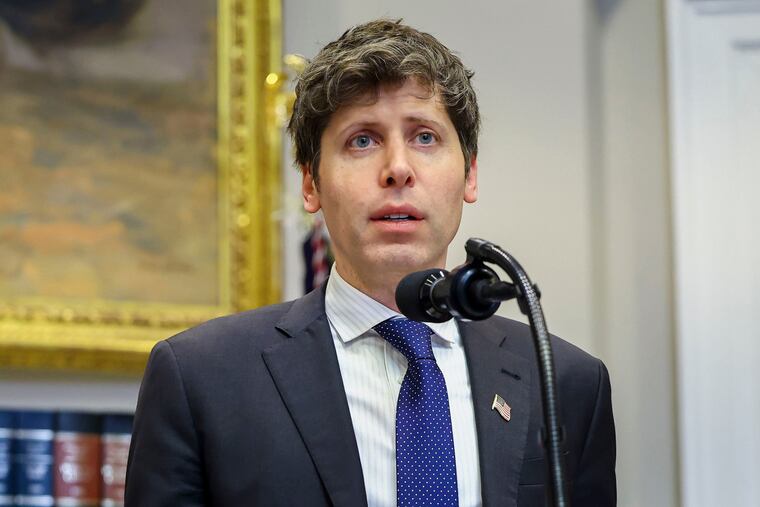
Delaware’s laws played a key role in shaping OpenAI’s non-profit structure, preventing it from becoming a conventional for-profit entity.
OpenAI, the artificial intelligence company co-founded a decade ago by Sam Altman and Elon Musk, has undergone a significant transformation as it adapts to the evolving landscape of technology and investment. Established initially as a nonprofit in Delaware, OpenAI’s mission was to develop artificial general intelligence (AGI) that benefits humanity. Over the past ten years, the organization has grown exponentially, most notably through the success of its best-known product, ChatGPT, which now boasts over 700 million weekly users.
As OpenAI’s impact and value surged, reaching an estimated 0 billion, concerns arose regarding its transition from a nonprofit to a for-profit structure. This shift became paramount as the company sought greater financial flexibility to fund its expansion and operations. OpenAI acknowledged that the resources required to advance AGI were far greater than originally envisioned. While OpenAI had made steps towards for-profit operations as early as 2019, the need for new investments in robust data processing infrastructures, particularly those powered by Nvidia technologies, became increasingly apparent.
Delaware’s nonprofit regulators became particularly vigilant as the startup’s financial prospects expanded. The restructuring was met with scrutiny, notably from Musk, who is now head of a competing entity, X.AI. He initiated legal challenges against the company’s restructuring plans, aiming to ensure adherence to the original public benefit mission.
In response to these concerns, Delaware Attorney General Kathy Jennings and California Attorney General Rob Bonta intervened. They emphasized the necessity of safeguarding OpenAI’s societal mission amidst its transition. Both states argued for public interest protections to ensure the organization does not diverge from its foundational commitment to benefit humanity, especially given mounting fears of misuse of AI technologies.
In October, the new public-benefit corporation structure was finalized, allowing OpenAI to operate as a for-profit entity while still fulfilling its obligations to public well-being. This new classification enables the company to prioritize public goals alongside profit, ensuring that its directors can act in ways that may not always align with immediate financial interests.
Furthermore, OpenAI’s restructuring includes the establishment of a Safety and Security Committee, tasked with overseeing the implications and applications of AI technologies. This committee will play a critical role in reviewing safety practices and retaining authority to halt potentially dangerous AI systems.
OpenAI has also reinforced its commitment to transparency and accountability within its operations. The organization will maintain significant oversight from its nonprofit arm, renamed the OpenAI Foundation, which retains the authority to influence board decisions.
In a related development, Microsoft has disclosed the terms of an extensive agreement with OpenAI, which has seen the tech giant invest approximately .6 billion to date. As OpenAI’s value approaches 0 billion, Microsoft anticipates that its stake will yield substantial returns. This investment not only strengthens Microsoft’s position in the AI sector but also creates a revenue-sharing arrangement between the two companies.
As OpenAI evolves, balancing the pursuit of innovation with societal responsibility remains a pivotal challenge. Decisions made in the coming months will shape the trajectory of the company and its contributions to artificial intelligence. The developments surrounding OpenAI serve as a bellwether for the future of AI applications in broader society, highlighting the delicate interplay between corporate interests and public welfare.
Media News Source