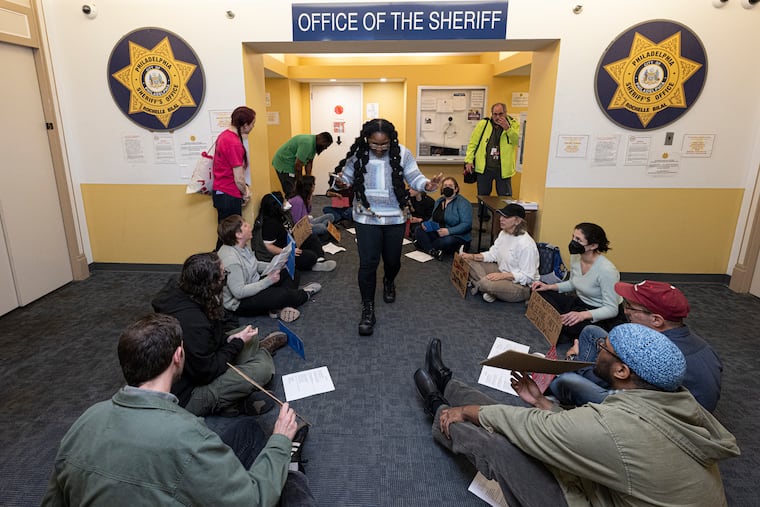
Demonstrators hold sit-in at Philadelphia Sheriff’s Office protesting ICE arrests at courthouse.
Activists from the group No Ice Philly conducted a sit-in at the Philadelphia Sheriff’s Office on Thursday, raising urgent demands for Sheriff Rochelle Bilal to take action against Immigration and Customs Enforcement (ICE) arrests occurring near the city’s courthouse. The demonstration underscored escalating tensions as advocates accuse the sheriff of allowing ICE to transform the courthouse into a “hunting ground” for immigrants.
The protest erupted into a chaotic scene as activists remained seated within the office, leading to several participants being handcuffed and escorted out by law enforcement. The protesters chanted for the sheriff to clarify her stance, repeatedly questioning why she has not implemented measures to protect immigrants from apprehension by federal agents.
No Ice Philly has been vocal in its criticism of Sheriff Bilal, contending that her office’s failure to restrict ICE presence has resulted in over 100 arrests of immigrants recently tracked from the courthouse and detained outside. The group, along with partners, has organized a week of direct action, which included a previous attempt by clergy members to block access to an ICE garage in Center City, resulting in ten arrests.
Demonstrators claim that ICE agents have effectively taken up residence at the Center City courthouse, often lurking in the lobby or searching hallways for immigrants to arrest, leading to apprehensions that they argue disrupt the judicial process. Advocates emphasize that many individuals targeted during these operations include witnesses, victims, and family members, which could discourage them from attending court proceedings and ultimately compromise the integrity of the judicial system.
In response to these actions, Sheriff Bilal’s office has asserted that it does not cooperate with ICE, does not aid in their operations, and does not share information with federal authorities. The sheriff’s representatives maintain that any compliance with ICE must align with court orders. A spokesperson from the sheriff’s office informed the protesters that Bilal was unavailable but suggested they could continue their demonstration outside the office.
In January, the judicial district overseeing the Philadelphia court system reiterated that the responsibility for managing ICE’s presence lies solely with the sheriff. Community leaders have urged discussions with court officials regarding the management of ICE activities, emphasizing the need for protective measures.
As demonstrations continue, civil rights advocates advocate for a public discourse on the parameters of ICE’s involvement at the courthouse, with a growing consensus that the presence of federal agents poses a threat to community trust in the legal system. The situation remains contentious as the dynamic between law enforcement, immigration policies, and community welfare unfolds in Philadelphia.
The rising tensions surrounding ICE operations reflect a broader national dialogue on immigration enforcement and its implications for access to justice, particularly for marginalized communities. As debates intensify, the actions of local authorities like Sheriff Bilal will likely remain under scrutiny from both activists and constituents advocating for humane treatment of immigrants.