Department of Justice sues Pennsylvania for voter roll information, claiming it poses risks to voter privacy.
The U.S. Department of Justice has initiated legal action against Pennsylvania in an effort to compel the state to supply its complete, unredacted voter registration database to the federal government. The lawsuit was filed on Wednesday in the Western District of Pennsylvania, targeting the Pennsylvania Department of State and its Secretary, Al Schmidt.
The Trump administration contended that Pennsylvania’s refusal to provide the voter data last month was in violation of federal law, asserting that the state’s decision impeded the DOJ’s efforts to ensure adequate maintenance of voter rolls. Pennsylvania officials maintained that withholding this data was necessary to protect voters’ privacy.
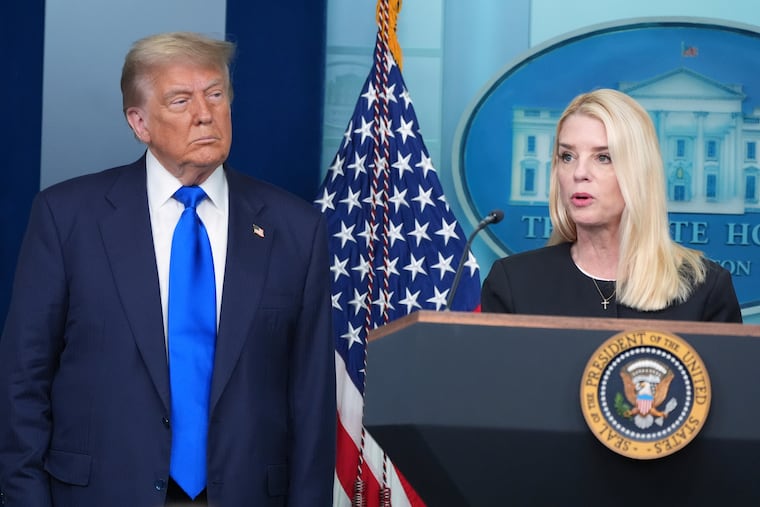
In a statement, Attorney General Pam Bondi underlined the federal government’s commitment to maintaining accurate and secure voter registration records across the nation. She declared that states that fail to fulfill this obligation should expect to face legal challenges from the Department of Justice. In addition to Pennsylvania, lawsuits have also been filed against Michigan, Minnesota, New York, and New Hampshire, with recent actions taken against Maine and Oregon.
Despite being a Republican-led state, New Hampshire is included in the list of states being sued. Since June, the DOJ has sent requests to election officials in numerous states seeking access to voter registration databases. The majority of these states, regardless of political affiliation, have either declined the requests or offered only the redacted voter files that are publicly accessible.
At this point, the Pennsylvania Department of State has not provided a response to the lawsuit. However, Secretary Schmidt previously rejected the DOJ’s written request for the full database, arguing that the agency lacked sufficient legal grounds for access. He pointed out that providing the complete database would compromise the personal information of thousands of residents, thus violating both state and federal privacy laws.
Furthermore, Schmidt has expressed concerns about the federal government’s increasing role in the electoral process, stating that the requests seemingly aim to gather expansive data on American voters. He suggested that the department could be satisfied with the same voter roll records already available to the public.
The legal struggles surrounding voter data requests have raised significant alarm among voting rights advocates and election law experts. Critics argue that these efforts are part of a broader strategy to instill doubt regarding election security ahead of the 2026 midterm elections.
Historical context underscores the gravity of these developments, particularly given former President Trump’s repeated promotion of unfounded claims regarding election fraud, including alleging that the 2020 election was stolen from him. His administration has rewarded individuals who support his claims, emphasizing the political dimension of this ongoing legal battle.
These concerns have been compounded by the American Civil Liberties Union of Pennsylvania, which has warned of potential legal action should the state move to share unredacted data with the federal government, citing laws that protect personal information.
In its complaint, the DOJ argues that Pennsylvania’s refusal to provide the requested voter information constitutes a violation of federal voting regulations, including the National Voting Rights Act and the Help America Votes Act. These laws mandate routine maintenance of voter rolls to prevent inaccuracies and ensure electoral integrity. The Justice Department specified that its request for information—including voters’ names, birth dates, addresses, and identifying numbers—aims to confirm Pennsylvania’s compliance with these requirements.
Secretary Schmidt, however, has maintained that such federal laws do not necessitate the disclosure of personal information, contending that the DOJ has not justified its need for specific data to evaluate state compliance with voter roll maintenance.
This situation remains fluid, with the potential for further developments as the legal proceedings continue.