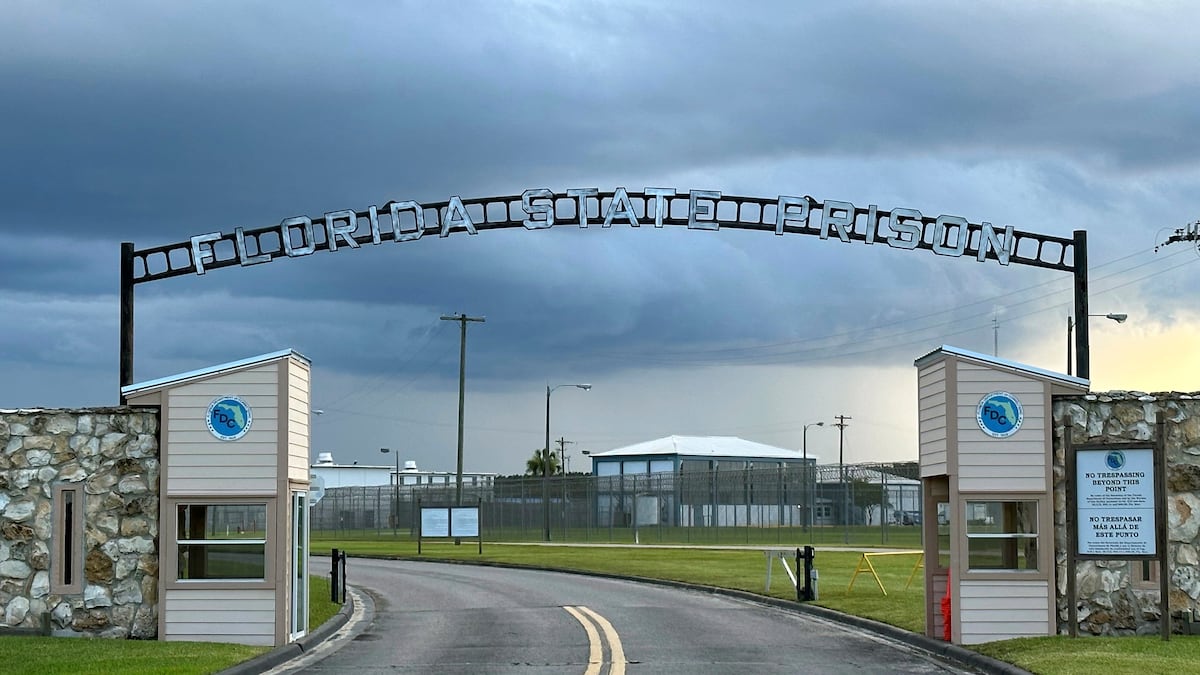
DeSantis signs death warrant for man convicted of 1994 rape and murder in Orlando.
TALLAHASSEE — In a notable escalation of Florida’s capital punishment proceedings, Governor Ron DeSantis has signed a death warrant for Thomas Gudinas, a man convicted of the 1994 rape and murder of Michelle McGrath in downtown Orlando. Gudinas, now 51 years old, is scheduled for execution by lethal injection on June 24, marking what could be the seventh execution in the state this year.
This announcement follows the execution of five inmates in 2025, with another inmate, Anthony Wainwright, facing execution on June 10. The state’s steady increase in the execution pace stands in stark contrast to recent years, where only one execution occurred in 2024 and six in 2023. Historically, Florida executed a maximum of eight individuals in a single year, achieved in 1984 and again in 2014.
Gudinas was found guilty in 1994 of murdering McGrath, who had been enjoying a night out in Orlando. Witness accounts placed McGrath last seen alive around 2:45 a.m. near a nightclub’s courtyard. It is alleged that she was attacked in a nearby parking lot. Her body was discovered later that morning in an alley, bearing signs of severe violence, including evidence of rape and blunt force trauma. The trial eventually moved to Collier County, where Gudinas was sentenced to death in June 1995.
The details of the court’s findings were outlined in a sentencing order by then-Circuit Judge Belvin Perry Jr., which was made available on the Florida Supreme Court’s website with the death warrant. The order described the brutal nature of the crime, emphasizing that the victim did not experience a swift death and condemned Gudinas for his “violently destructive” behavior.
As Florida continues to navigate the complexities of capital punishment, the signing of the Gudinas death warrant suggests a concerted effort by the DeSantis administration to expedite execution processes. For context, Florida’s Department of Corrections indicates that the state has historically seen fluctuations in the application of the death penalty, with execution rates tied closely to legal challenges and changes in public sentiment.
Additionally, Governor DeSantis has moved to sign a death warrant for Wainwright, who was convicted in 1994 for the abduction, rape, and murder of a woman from a supermarket parking lot in Lake City. Wainwright’s legal team has sought intervention from the Florida Supreme Court in their efforts to delay the execution.
The state’s recent actions reflect a reinvigorated stance on capital punishment under DeSantis, whose administration appears committed to implementing the death penalty more frequently. As the debate surrounding the ethics and effectiveness of capital punishment continues, Florida remains at the forefront of this contentious issue.
Media News Source.