
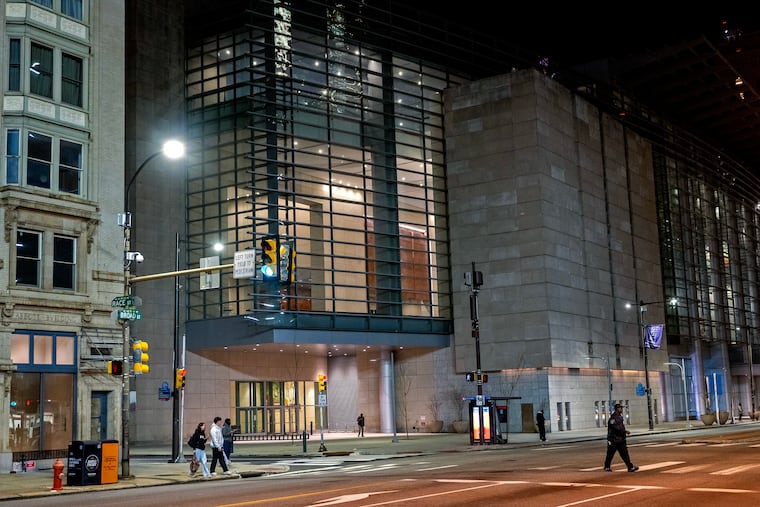
Developer of convention center billboard claims he is not obligated to pay million in community benefits.
As construction plans progress for two substantial digital billboards near the Convention Center in Philadelphia, residents and local stakeholders are scrutinizing a decade-old ordinance that authorized similar displays and outlined community benefits amounting to million. The legislation aimed to allocate these funds among four nonprofit organizations and a condo owners’ association over a 25-year horizon, creating a framework for community support surrounding the billboards.
However, the developer behind the billboards, Thaddeus Bartkowski, contends that the current installations differ fundamentally from what the original law envisioned. He argues that, because the billboards will be situated on state property, there is no legal requirement for him to provide financial contributions to the aforementioned community groups. Instead, Bartkowski has proffered a reduced financial offer to three organizations, leaving them to deliberate whether to accept this lesser sum or pursue legal remedies for the original agreements.
The 2015 City Council ordinance emphasized the need for high-impact digital displays that occupied public right-of-way. In contrast, Bartkowski’s project includes what he characterizes as “monument displays” located on property leased from the Convention Center. The developer’s plans reveal that the billboards may exceed height limitations established by the original law, presenting a creative interpretation of the ordinance’s provisions. The Broad Street billboard is anticipated to reach 67 feet, surpassing the 58-foot limit for structures attached to buildings, while the freestanding billboard at Seventh and Callowhill Streets is projected to soar to 87 feet—nearly double the established threshold.
While the city’s digital billboard ordinance initially promised generous community benefit payments, those commitments have come under scrutiny. Bartkowski asserts that the new billboards will not be visible from major landmarks such as the Reading Terminal Market and Avenue of the Arts, thereby exempting him from the original obligation to these stakeholders. This stance has been met with resistance from local advocates, including Bill Green, a former City Council member and current board member of the 201 Broad condo association. He emphasizes that the alterations in billboard dimensions do not negate the need for adherence to the community benefit agreements or require zoning review.
The broader implications of this case touch on systemic issues within community benefit agreements. Legal expert Carl Primavera noted that these arrangements were often adopted as alternatives to stringent zoning regulations. However, enforcing these agreements can prove challenging without robust backing from municipal leadership. Without clear mechanisms for accountability, the effectiveness of community benefit agreements remains in question.
In addition to revenue expectations—projected at over 0,000 annually from advertising—the eventual outcome of these digital billboards will likely influence public perception and community relations surrounding urban development in Philadelphia. As discussions between Bartkowski, local organizations, and city officials continue, the question of compliance and community engagement remains paramount.


