Emanuel Ax Celebrates 50 Years with the Philadelphia Orchestra at a Special Beethoven Event.
The Philadelphia Orchestra’s recent performance exemplified a standard concert format by juxtaposing two historic symphonic pieces against a contemporary work, creating a compelling musical narrative for attendees. The evening commenced with William Grant Still’s symphonic suite, Wood Notes, composed in 1947. This evocative piece captures the essence of Southern landscapes, drawing inspiration from poems by Joseph Mitchell Pilcher, both of whom share a Mississippi heritage. The program included these texts, providing context to Still’s stirring musical interpretations, which ranged from dissonant textures to lyrical melodies that evoke the rural sentiments of the South.
Wood Notes showcases Still’s artistic evolution, embodying his three self-described creative phases: “ultramodern,” influenced by his studies with Edgard Varèse; “racial,” which highlights African American musical heritage; and “universal,” reflecting neo-classical elements. Among its five movements, the third, “Moon Dusk,” stood out for its haunting qualities, suffused with flickering colors and a lyrical aura that lingered in the air, evoking a sense of mystery amidst the Southern landscape.
While the inclusion of Wood Notes as an opener was commendable, its placement in concert order may have diminished its impact, perhaps benefitting from a pairing with works by contemporaries such as Aaron Copland or Ruth Crawford Seeger to underscore its significance further.
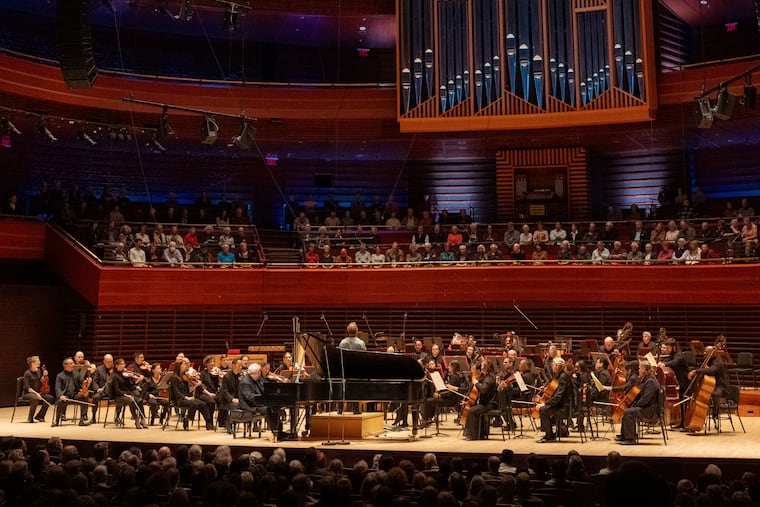
The concert also marked a notable anniversary, celebrating pianist Emmanuel Ax’s 50-year collaboration with the Philadelphia Orchestra. Ax delivered a formidable performance of Beethoven’s Piano Concerto No. 3. The cadenza, an integral part of the composition, showcased Ax’s virtuosity in an unaccompanied passage that simulated an improvised performance, creating a moment of suspended time. Though the second movement initially lost the audience’s attention, it ultimately served as a prelude to the spirited rondo finale, reminding listeners of the ebb and flow inherent in classical music.
The evening culminated with Brahms’s Symphony No. 4, a work that unequivocally dominated the program. The first movement is a prime example of the Romantic style, characterized by its vibrant orchestration and harmonic complexity. Conducted by Yannick Nézet-Séguin without a score, the performance exuded energy and urgency, with the orchestra transitioning seamlessly between movements, heightening the dramatic effect of Brahms’s composition.
Brahms, known for his reverential nods to Beethoven and Bach, infused modernist elements into his Fourth Symphony. Each movement encapsulated a wide array of symphonic emotion, creating a multifaceted musical experience that left a lasting impression on the audience.
Overall, the concert provided a rich tapestry of musical experiences, effectively introducing William Grant Still’s lesser-known works alongside traditional masterpieces, while showcasing the remarkable capabilities of the symphony orchestra. The performance, titled “Emanuel Ax Plays Beethoven,” is set to continue on select dates at Marian Anderson Hall, further inviting audiences to revel in the beauty and dynamism of orchestral music.
For concert details, visit Media News Source.