EU leaders debate strategies for engaging with Moscow amid ongoing Ukraine conflict.
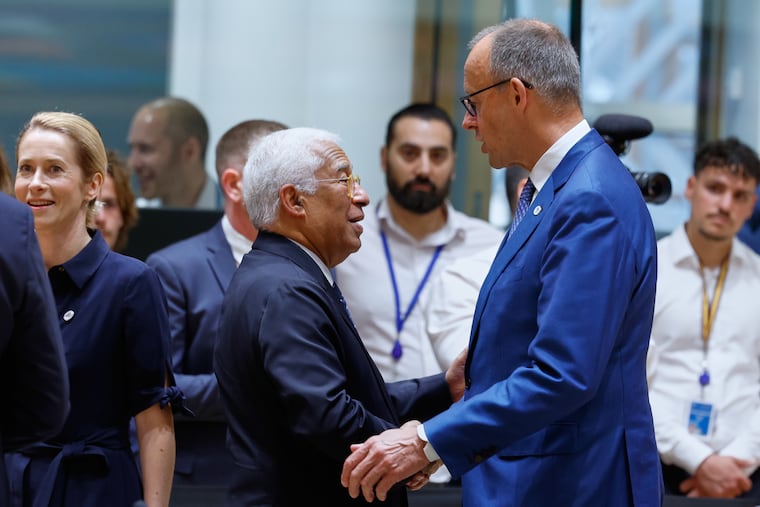
European Union leaders recently grappled with the challenge of establishing a direct communication channel with Moscow, an effort aimed at safeguarding the EU’s interests amid ongoing discussions surrounding the conflict in Ukraine. The issue arose during a two-day summit led by European Council President António Costa in Brussels. Costa advocated for outreach to the Kremlin, suggesting that a senior official be designated for this purpose. Importantly, he clarified that this initiative would not serve as an alternative negotiation track to the ongoing U.S.-led discussions, which have shown limited progress.
Costa articulated the necessity of creating a direct line of communication to avoid relying solely on interpretations of Russian intentions relayed through third parties. This sentiment was echoed by European Commission President Ursula von der Leyen, who underscored that the security of the entire continent is at stake, thereby necessitating Europe’s proactive involvement in crafting a sustainable peace.
Debates on whether the EU should appoint a mediator for talks with Russia have gained momentum; however, many leaders remain skeptical. They contend that President Vladimir Putin may be disinclined to engage in negotiations. Rather than appointing a mediator, EU nations have shifted their focus to outlining concessions that Russia must accept for peace to materialize. German Chancellor Friedrich Merz emphasized that any peace talks would involve not only Ukraine and Russia but also the European Union and the United States. He noted that the decisive voice for the EU will emerge during negotiations, rather than prior.
While the concept of a back channel for communication received mixed reactions, some leaders showed support for Costa’s proposal. Belgian Prime Minister Bart De Wever humorously suggested that Costa could serve as the envoy to Moscow, reflecting a light-hearted tone amid a serious discourse. Irish Prime Minister Micheál Martin acknowledged the potential value in establishing a channel, although he recognized that negotiations specifically between Ukraine and Russia remain paramount, especially given the current lack of willingness from Moscow.
Adding complexity to these discussions, Russian authorities recently indicated a conditional openness to dialogue with Europe. However, they imposed the requirement that Europe refrain from approaching these discussions from a position of force. Russian Foreign Minister Sergey Lavrov reiterated the Kremlin’s stance that it cannot act as an unbiased mediator, asserting that the current military tensions imposed by Western nations present significant security risks.
Overall, the recent summit highlighted the EU’s struggle to present a unified diplomatic strategy regarding the ongoing crisis in Ukraine, as leaders continue to navigate complex geopolitical dynamics in hopes of fostering a peaceful resolution.