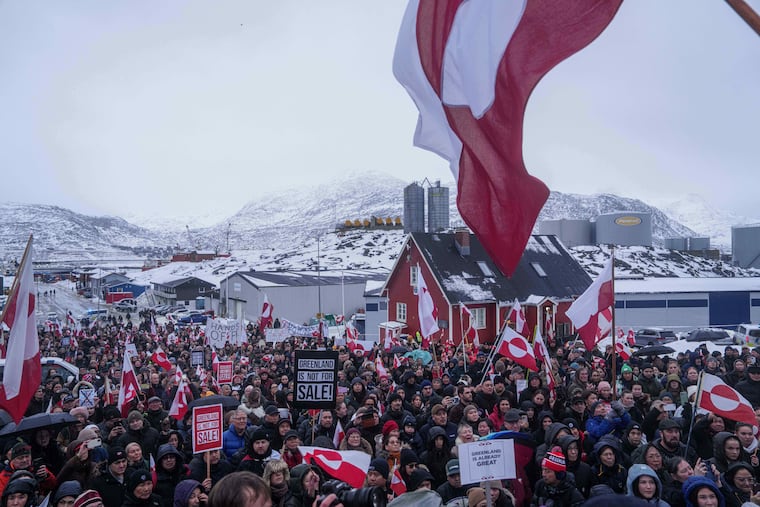
Europe warns of significant risks after Trump threatens tariffs related to Greenland, raising concerns about economic stability.
In a significant escalation of tension, eight European nations responded critically to U.S. President Donald Trump’s proposal for a 10% tariff on countries opposing American claims over Greenland. The statement, issued on Sunday, highlighted a growing rift in trans-Atlantic relations, with leaders warning that such threats could lead to a severe decline in diplomatic ties. The nations involved include Denmark, Norway, Sweden, France, Germany, the United Kingdom, the Netherlands, and Finland, signaling a rare moment of unity among these key European allies.
This collective rejection of Trump’s tariff suggestion marks one of the strongest rebukes from European partners since his administration began. In recent months, many European leaders had employed a strategy of diplomacy and positive engagement toward Trump, particularly regarding the ongoing conflict in Ukraine. However, Sunday’s statement and the movement of troops to Greenland for a Danish military exercise illustrate a shift toward a more assertive stance.
The European nations emphasized that the troops participating in Operation Arctic Endurance would pose “no threat to anyone,” directly countering Trump’s narrative as he appears to utilize tariffs as leverage to renegotiate Greenland’s status. Observers note that Greenland, a semi-autonomous territory of NATO ally Denmark, is considered strategically critical for U.S. national security interests.
The joint declaration expressed full support for Denmark and the people of Greenland, reaffirming the principles of sovereignty and territorial integrity. European leaders warned that continued tariff threats pose serious risks to shared economic prosperity and trans-Atlantic unity.
As the potential for tariff implementation raises questions about the legal avenues available to the White House, including the applicability of emergency economic powers, EU foreign policy chief Kaja Kallas emphasized that divisions induced by the U.S. could benefit adversaries like China and Russia. Kallas asserted that issues of Greenland’s security could be adequately dealt with within NATO, underscoring the importance of maintaining a united front.
Despite efforts to maintain collaboration between Europe and the U.S., political reactions from within the U.S. have been predominantly negative. Senior U.S. officials and lawmakers argue that the tariffs would adversely impact Americans, with Senator Mark Kelly arguing that Trump’s strategy could increase costs for the U.S. public while undermining national security interests.
Moreover, former Vice President Mike Pence expressed concerns regarding Trump’s methods in seeking territory through tariffs, warning that such moves could fracture essential alliances. Meanwhile, European leaders, including Italy’s Prime Minister Giorgia Meloni, criticized the tariffs as a misstep, reaffirming that troop deployments were not antagonistic toward the U.S. but part of broader security measures.
Trump’s announcement has also led to a rare consensus among diverse British political factions, all voicing discontent over the tariffs’ implications for ongoing trade relations. The united response from European nations and the mixed domestic reactions in the U.S. highlight a critical turning point in international relations, as allies grapple with the uncertainties of Trump’s foreign policy approach.
Overall, the situation underscores the complex interplay of geopolitics, diplomacy, and economic strategy as global powers navigate an increasingly fraught landscape.