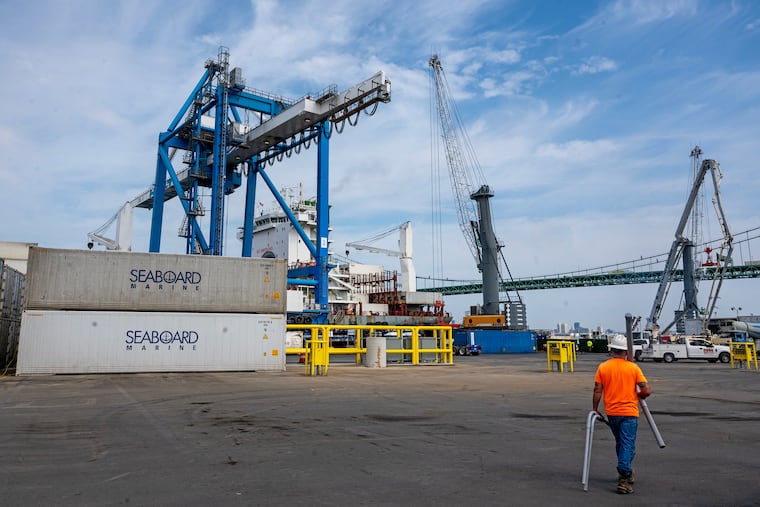
European cargo ships are changing routes to Philadelphia due to delays in replacing the Key Bridge in Baltimore.
In a significant shift in trans-Atlantic shipping operations, two leading global container shipping companies, A.P. Moller-Maersk of Denmark and Hapag-Lloyd AG of Germany, will reroute their cargoes to Philadelphia-area terminals. This change follows the prolonged delays in restoring Baltimore’s port operations due to the collapse of the Key Bridge 21 months ago, which has severely impacted shipping traffic to that city’s harbor.
The decision, effective January 4, comes as part of a major route transformation for the Gemini joint venture operated by these shipping giants. Customers were informed of this development through a note from Holt Logistics, a Philadelphia-based logistics provider that is significantly expanding its operations at the Delaware River’s container terminals.
This strategic realignment is not just a boon for the shipping companies involved but is also expected to elevate longshore and trucking jobs within the region. These developments signal a positive outlook for the local economy, with increased employment opportunities for waterfront laborers and many ancillary service providers.
Holt Logistics, which manages container operations in the Port of Philadelphia on land acquired by the state port agency PhilaPort, is expanding its capacities in tandem. The Port of Wilmington, Delaware, and Penn Terminals in nearby Delaware County will continue to handle diverse cargoes, including automobiles, tires, and wine, highlighting the region’s operational breadth.
As of last year, the Philadelphia area recorded 841,000 twenty-foot equivalent units (TEUs) transiting through its ports. With the anticipated new service routes and additional shipping lines to Australia and New Zealand set to commence in 2025, these figures are expected to grow considerably. Under the leadership of Jeff Theobold, who will retire in June, Philadelphia’s container shipping volume has nearly doubled since 2016, contrasting sharply with the 30% expansion in overall U.S. container volume during that same period.
Baltimore, having previously handled substantial container traffic, is witnessing a drastic downturn, with shipments dropping from 1.3 million TEUs in 2023 to approximately 700,000 last year. The newly adjusted shipping routes will facilitate smoother transportation of containers between terminals in Newark, New Jersey, Norfolk, Virginia, and several ports in Europe.
PhilaPort representatives have indicated that the inclusion of Germany in the list of countries with direct shipping routes to Philadelphia could attract additional cargoes, although a complete transfer of Baltimore’s freight to Philadelphia remains uncertain.
Further bolstering its shipping capacity, Philadelphia anticipates an increase in vessels from Australia and New Zealand, driven by two newly added lines that have made Philadelphia their northern port destination. With these developments, Philadelphia is poised to become a leading East Coast hub for shipments from the South Pacific region.
Notably, Philadelphia’s terminal boasts one of the fastest arrival-to-departure turnaround times in North America, enhancing its competitive edge in cost efficiency. This efficiency is attributed to effective collaboration among industry stakeholders including unions, port authorities, and logistics companies. Preparations for further expansion are underway, with plans to add more unloading equipment to enhance operating capabilities even as regional competition intensifies with ports in Baltimore and the southern U.S. states.
In a changing landscape where geographic and logistical advantages dictate shipping choices, Philadelphia stands to solidify its position in the competitive arena of maritime transport amidst evolving global trade dynamics.