
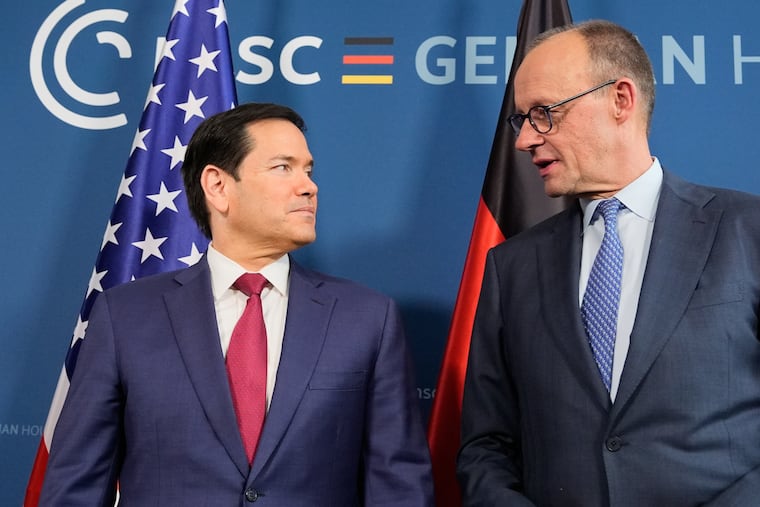
European leaders at Munich Security Conference vow to uphold Western values amid perceived neglect by the White House.
MUNICH — The Munich Security Conference, a key gathering for international leaders, hosted a starkly different atmosphere this year compared to the previous edition, particularly in light of Vice President JD Vance’s controversial speech in 2023. Vance had suggested that internal dissent within NATO allies posed a greater threat to Europe than external forces like Russia or China, igniting considerable backlash among European nations. His assertions, which seemed to dismiss the urgency of the situation regarding the ongoing war in Ukraine, raised questions about U.S.-European unity and strained transatlantic relations.
This year’s conference, under the theme “Under Destruction,” unfolded at the elegant Bayerischer Hof hotel, where it was framed by a bleak overview of global politics. The annual security report characterized the current political landscape as “wrecking-ball politics,” emphasizing a departure from measured reforms in favor of sweeping destruction.
European leaders expressed a newfound urgency regarding their security responsibilities, an awakening largely attributed to the enduring threat posed by Russia’s aggression in Ukraine. German Chancellor Friedrich Merz articulated this sentiment, asserting that Europe had relied too heavily on American support for its postwar defense. He highlighted the fragility of the existing international order and called for a collective effort to reshape the geopolitical landscape.
Merz’s comments signified a broader recognition among European leaders of their need to safeguard democratic values while countering threats from Russia. The conference underscored their commitment to defending Ukraine, especially as U.S. support appears to wane. European countries are now facing the challenge of increasing their defense budgets independently while coordinating military support for Ukraine. This shift comes in response to the necessity of bolstering their security in light of the Russian military campaign.
Despite skepticism from certain sectors of the U.S. political landscape, the message from Munich was clear. European nations are stepping up to ensure their security, irrespective of U.S. policy directions that may downplay the significance of Russian threats. Continued Russian aggression has transformed the security landscape in Europe, prompting nations to reevaluate their defense strategies and commitments.
The vitality of Ukraine’s role as a bulwark against authoritarianism was also prominently featured at the conference. Many leaders expressed admiration for Ukraine’s standing as a defender of shared democratic values, emphasizing the importance of support for Kyiv in the ongoing conflict.
While the American delegation sought to downplay European concerns regarding Russian hostility, it became evident that European officials remain acutely aware of the dangers posed by Russia’s imperial ambitions. The ongoing conflict has initiated a new phase of open hostilities, affecting the security dynamics of the region.
As European nations navigate these challenges, they recognize the necessity of collaboration, both amongst themselves and with the United States, to effectively counter threats and preserve their democratic principles. The Munich Security Conference served as a pivotal moment, reinforcing the resolve of Europe to shape its future in the face of adversity, echoing Chancellor Merz’s assertion that collective action is vital for the protection of their interests and values.
This renewed commitment among European leaders presents a critical juncture in fortifying not only their defense strategies but also their political resolve amid an unpredictable global landscape. The outcome of these discussions may fundamentally redefine the transatlantic alliance moving forward.
Media News Source


