
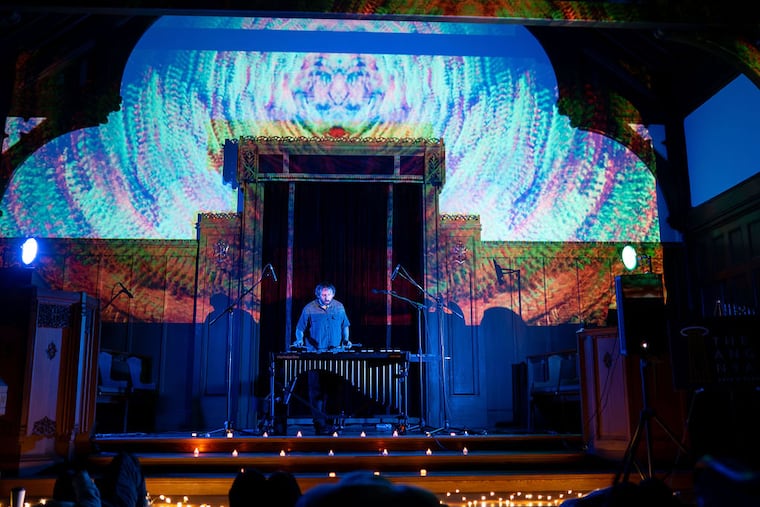
Falling asleep in sound baths becomes a popular health trend in Philadelphia.
The recent sound bath event held at Kensington’s Maas Building featured an unconventional concert experience that contrasted sharply with the dynamic nature of typical live performances. Attendees, approximately 30 in number, lay on mats and blankets, some visibly relaxing into a deep state of repose, while electronic musician C. Lavender delivered a one-hour set characterized by a series of immersive soundscapes, including crashing gongs and pulsating synth drones. The atmosphere was notably subdued, as many audience members remained motionless, seemingly entranced by the sonic experience.
Sound baths, which focus on utilizing sound for therapeutic purposes, have rapidly gained traction across various venues in Philadelphia, expanding beyond their traditional locations in yoga studios and wellness centers. This growing trend encompasses events hosted in diverse settings including hospitals, public schools, and even cat cafes. The practice of sound bathing, which engages participants in an auditory immersion designed to promote relaxation and healing, draws on historical traditions from cultures around the world. Ancient practices, such as vocal chants and musical arrangements from Greece, Egypt, and India, inform modern methodologies enhanced by contemporary scientific understanding and experimentation in music.
Sound healing practitioners like Pete Angevine, who coordinates the “Liminal States” concert series for Bowerbird, emphasize the profound impact of sound on the human body, particularly given its high water content. Vibrational frequencies, as proposed by sound healers, can evoke significant changes in emotional and physical well-being. Angevine notes the increasing recognition of sound as a viable method for relaxation and healing, supported by modern research indicating that sound vibrations can lower heart rates, respiratory rates, and cortisol levels.
Among the sound healers gaining prominence in this movement is Chris Dingman, whose journey into sound healing began while studying music at Wesleyan University and developed further during his time in India. Following personal experiences with sound as a mechanism for emotional support during his father’s illness, Dingman has dedicated himself to leading sound baths that promote healing and emotional processing.
Public performances have become increasingly common, with practitioners reporting heightened interest and engagement from attendees. Many participants arrive equipped with mats and pillows, indicating familiarity with this therapeutic approach. This trend reflects a significant cultural shift toward holistic wellness practices that engage both the body and mind.
Experts like Jonathan Goldman, founder of the Sound Healers Association, highlight the exponential growth in awareness surrounding sound as a healing modality within the last decade. An expanding body of scientific research provides support for the therapeutic benefits of sound bathing, demonstrating its efficacy in addressing chronic pain, mental health issues, and enhancing well-being for neurodivergent individuals.
As sound healing continues to gain recognition, its practitioners emphasize the importance of restoring individuals to their innate states of health and harmony. For those interested in experiencing the soothing and transformative power of sound, resources like Bowerbird provide information on future sound bath performances, inviting participants to explore this increasingly popular form of holistic therapy.


