
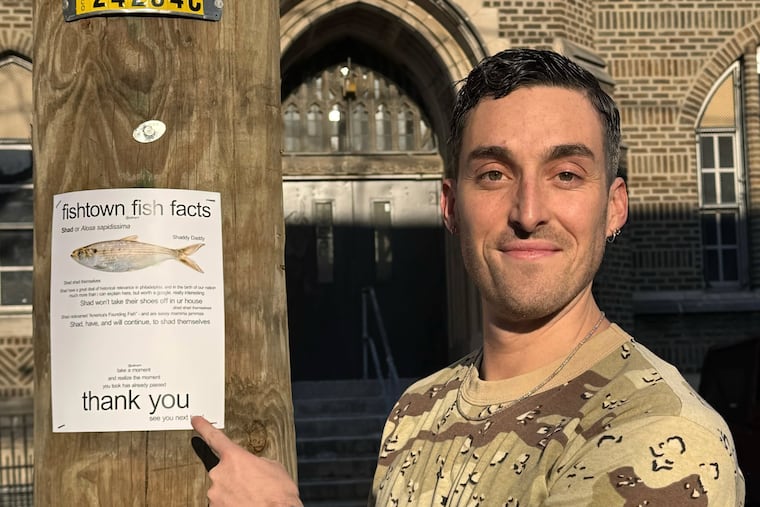
Fishtown resident shares interesting fish facts with local community.
In the vibrant neighborhood of Fishtown, Philadelphia, a unique public art initiative has emerged that combines humor with an educational twist. Residents strolling through the area may encounter a series of posters adorning lampposts and utility poles, featuring images of various fish species alongside their scientific names. While these posters may initially appear to be conventional educational displays, further examination reveals a more playful and whimsical approach to information dissemination.
The collection, known as “Fishtown Fish Facts,” showcases more than a hundred posters, each offering non-traditional insights into aquatic species. For instance, one poster displays a striking image of a striped bass with the caption detailing its supposed living conditions. The playful tone and humorous content serve to entertain rather than educate rigorously, a quality that has resonated with locals. Though some facts may be exaggerated or incorrect — for example, the claim suggesting that striped bass live exclusively in freshwater — the initiative was never intended as a serious educational campaign.
Niall Paredes, a 32-year-old creative and the architect behind this project, conceived the idea after relocating to Fishtown about a year ago. Drawing inspiration from the numerous flyers that typically clutter the neighborhood’s poles—many pleading for attention or monetary support—Paredes sought to bring a smile to his neighbors through lighthearted and artistic expressions. The result is a series infused with contemporary slang and a distinctive comedic style that reflects a younger generation’s vernacular.
In this initiative, humor is paired with a reflective message. Each poster concludes with the line, urging viewers to pause and recognize the fleeting nature of moments in life. Paredes aims to engage onlookers, encouraging them to reflect while simultaneously enjoying a chuckle. This blend of art and amusement contributes to the rich tapestry of public artistry in Philadelphia, a city known for its profound dedication to urban beautification through various artistic means.
Paredes, who admits his understanding of marine biology is minimal, has grown increasingly knowledgeable about aquatic life through his research. Among his findings, the shad has emerged as a favorite, influenced partly by the historical narrative that links it to George Washington’s troops during the Revolutionary War.
Looking forward, Paredes intends to expand the “Fishtown Fish Facts” initiative beyond its current confines, with plans to introduce similar posters in neighborhoods such as Manayunk, Center City, and South Philadelphia. As he explores the diverse species that inhabit the region’s waters, he remains committed to this project, embodying the ethos that there remains much to learn—and laugh about—in the vast ocean of possibilities.
This charming intersection of humor and art continues to set the stage for community engagement and has already begun to capture the attention and admiration of Fishtown residents and visitors alike.


