
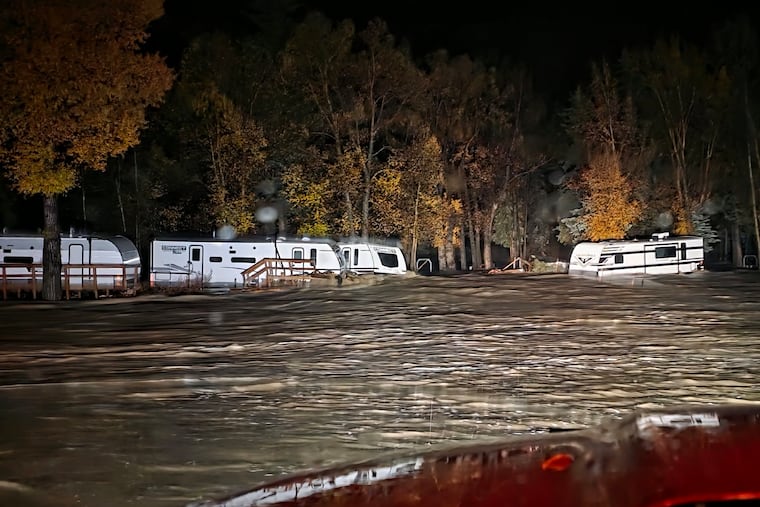
Heavy rainfall has resulted in widespread flash flooding and mandatory evacuations across the Southwest, impacting various communities in Arizona and Colorado. As of Sunday, August 13, local officials are urging residents in these areas to heed evacuation orders and prepare for potentially catastrophic scenarios, including a historic surge in river levels.
In southwestern Colorado, the community of Pagosa Springs, known for its scenic hot springs and proximity to ski resorts, is at particular risk. Authorities from Archuleta County have forecasted that the San Juan River is likely to reach more than 19 feet, surpassing the historical flood level of 17.8 feet recorded during the devastating flood of 1911. In a statement, officials emphasized the severity of the situation, labeling it as potentially catastrophic and warning of extensive damage.
Further south, the picturesque town of Sedona, Arizona, issued immediate evacuation orders for residents near Oak Creek as floodwaters began to rise dangerously. Nearby Camp Verde has also called for evacuations along the Verde River, West Clear Creek, and Wet Beaver Creek, with reports of multiple individuals trapped within their homes due to the sudden flooding.
Meteorological assessments indicate that parts of Arizona could experience rain equivalent to two to three months of precipitation within just a few days. Meteorologist Aaron Hardin of the National Weather Service in Tucson described the ongoing weather patterns as perilous, leading to flash flood warnings and swift water rescues. Rainfall amounts of up to four inches are anticipated across affected regions, fueled by a succession of Pacific storm systems.
The weather service has issued flood watches across nearly all of Arizona, extending into part of southern Utah, southwestern Colorado, and western New Mexico. This includes the arid Four Corners area where Arizona, Colorado, New Mexico, and Utah meet.
In response to the rising waters, officials in Pagosa Springs have advised residents in low-lying regions adjacent to the San Juan, Rio Blanco, Navajo, and Piedra Rivers to seek shelter immediately. The region’s main highway will also close due to hazardous conditions, prompting an urgent call for evacuation as emergency services may be limited.
Residents of Sedona, too, are being cautioned to avoid crossing flooded roads and to remain vigilant in challenging weather. Emergency responders from neighboring towns are assisting local fire and police forces in managing rescue efforts for individuals trapped by rising waters. The Sedona Fire District has also broadcast warnings urging residents to stay at higher ground and pay close attention to emergency alerts. The intense rainfall has led to alarming visuals of floodwaters engulfing vehicles and properties, as residents document the quickly deteriorating conditions on social media.
As communities brace for what could be a historic flooding event, meteorological experts and local officials are emphasizing the urgency of preparedness and compliance with evacuation notices. With conditions expected to worsen through the early part of the week, the focus remains on ensuring the safety of affected residents while preparing for potential recovery efforts in the aftermath of the storm.
Sources report the situation is evolving, and residents are urged to remain alert and informed via local news outlets and emergency service announcements.