Food truck owners ask City Council to revoke the recently approved extended business curfew.
Food truck vendors and late-night business owners in Northwest Philadelphia and surrounding areas are voicing concerns over a proposed curfew that would require many to cease operations by 11 p.m. The measure, which covers parts of North Philadelphia and Kensington, has sparked significant backlash from local entrepreneurs who argue that it will adversely affect their livelihoods.
These food vendors play a vital role in the community, providing affordable food options to late-night shift workers, including healthcare professionals, first responders, and night owls. Many food trucks traditionally operate well into the early morning hours, with prime business occurring during these times.
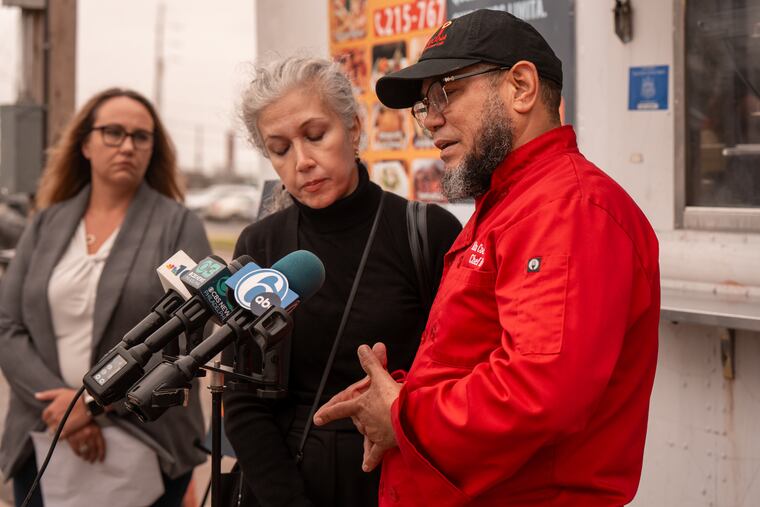
Owners affiliated with the newly established Latino Food Truck Association gathered to express their grievances, indicating that the tighter restrictions could lead to losses exceeding thousands of dollars each week and result in job layoffs. José Luis, a food truck owner, emphasized the devastating impact that this curfew may impose, sharing his personal experience of reduced hours and workforce downsizing.
Originally, a more limited late-night business curfew was enacted in April 2024, targeting specific areas within Kensington. Introduced by Councilmember Quetcy Lozada, the initiative aimed to enhance safety and combat nuisance businesses, particularly unregulated smoke shops. Subsequently, the legislation was expanded in August to encompass larger sections of North Philadelphia and Kensington, drawing the ire of local business operators.
Lozada has not publicly commented following the recent developments, but proponents of the expanded curfew argue it serves a public safety function. The Institute for Justice warns that the new regulations would amplify curfew coverage by approximately 500%, potentially diminishing the viability of late-night food services across a broader area. The revised bill, in addition to extending curfew hours, doubles penalties for violations from 0 to ,000.
The mayor’s decision on the bill is due by mid-September, after which it could become law if not addressed. Food truck owners, joined by advocates from the Institute for Justice, are urging City Council to reconsider the measures.
While Lozada maintains that the impacts on food trucks will be minimal, citing existing regulations that limit operation hours to between 7 a.m. and midnight, vendors assert that they have frequently worked beyond these constraints without incident due to lax enforcement.
In response to the proposed changes, the Latino Food Truck Association has proposed establishing a late-night food truck park in North Philadelphia to consolidate vendors in a designated area, but this idea has yet to progress.
Critics of the curfew argue that the community was not adequately consulted prior to the legislation’s adoption, with some business owners apprehensive about the broader implications on their operations. Mitesh Patel, owner of Medicine Shoppe Pharmacy in Kensington, expressed concerns regarding potential fines despite only operating during standard hours and remaining open overnight for hospice patients.
As discussions continue, the future of food trucks and late-night businesses in these neighborhoods hangs in the balance.